


 English
 русский
 Español
 Deutsch
 عربى
عربى 中文简体
中文简体
Content
A coach opens a carton stamped size 5 and hands out twelve balls. Two players palm them comfortably; the rest fumble the first chest pass. Nothing is defective. The balls are the wrong grade of size 5 for that age group, and the gap lives in measurements most buyers never write onto a spec sheet.
What a Size 5 Basketball Actually Measures
A size 5 basketball is the youth and small-player ball defined by a circumference of roughly 27.0 to 27.75 inches (685 to 705 mm) and a weight near 14 to 17 ounces (400 to 495 grams).
Definition. A size 5 basketball is the smallest ball built for live play. It sits between the size 3 mini ball and the size 6 women's and youth ball. FIBA lists it as the Mini basketball, and North American youth leagues treat it as the default ball for players around 8 to 11 years old.
Those figures look tight until you compare rulebooks. FIBA Mini is listed at 685 to 700 mm and 465 to 495 g, while several retail chains quote 27.5 to 27.75 inches and a lighter 14 to 16 ounces. Both are correct inside their own system. The practical consequence is that a ball built to one standard can measure outside another, so a printed size 5 label proves nothing on its own.
Circumference is also measured on an inflated ball, at the widest point, after the ball has settled. Pump a size 5 ball to 7.5 to 8.5 PSI and let it rest for a day. A ball measured cold or half-flat can read close to half an inch small, which is why two buyers measuring the same shipment sometimes report different numbers.
Size 5 in the Full Basketball Size Range
Size 5 is the middle rung of the youth ladder, and it is the only size designed around the hand span and grip strength of an eight- to eleven-year-old.
| Size | Circumference | Weight | Age band | Typical use |
| 3 | 22.0 to 22.5 in (560 to 570 mm) | 10 to 12 oz (280 to 340 g) | 4 to 8 | Mini ball, first dribbling and passing drills |
| 5 | 27.0 to 27.75 in (685 to 705 mm) | 14 to 17 oz (400 to 495 g) | 8 to 11 | Youth leagues, FIBA Mini, school programs |
| 6 | 28.5 to 29.0 in (724 to 737 mm) | 18 to 20 oz (510 to 565 g) | 9 to 14, women 12 and up | Women's professional and youth competition |
| 7 | 29.5 in (749 to 762 mm) | 20 to 22 oz (567 to 624 g) | 15 and up | Men's professional and adult recreational play |
The jump matters more than the numbers suggest. Moving a ten-year-old from size 5 to size 6 adds about 1.3 inches of circumference and roughly 3 ounces of mass. A wider, heavier ball changes the shooting motion, and a player pushed up a size too early usually learns to shove the ball rather than shoot it.
The jump from size 5 to size 6 adds about 1.3 inches of circumference and roughly 3 ounces of mass. For a ten-year-old, that is a different shooting motion, not a minor upgrade.
Coaches and program buyers who need to cross-check these figures against league rules can use our official dimensions and age chart, which sorts the same measurements by playing level and body size.
How to Confirm a Size 5 Ball Before You Order
You confirm a size 5 ball by measuring the inflated circumference and weight yourself, not by trusting the carton, the listing title or the studio photo.
- Inflate the ball to 7.5 to 8.5 PSI, then let it rest for 24 hours so the bladder and cover settle. Measuring a freshly pumped ball gives a size that will shrink overnight.
- Wrap a soft tape measure around the widest point, crossing the seam line. A regulation size 5 ball lands between 27.0 and 27.75 inches.
- Weigh the ball on a kitchen scale. Anything between 400 and 495 grams passes. Below 400 grams, you are holding a foam or promotional ball, not a youth game ball.
- Drop it from shoulder height and watch the rebound. A ball that bounces at an angle, or thuds on the second bounce, usually has a bladder or roundness problem rather than a cover problem.
A ball that measures 27.3 inches and 430 grams is in specification. A ball that reads 26.5 inches straight out of the box is labelled size 5 but plays like a size 4, and a nine-year-old will feel that difference within a week.
Materials and Construction Behind a Size 5 Ball
A size 5 basketball is built from one of four cover families, and the cover, not the diameter, decides where the ball belongs.
Rubber and PVC
- Built for blacktop, gravel and wet outdoor courts
- Lower unit cost, which suits bulk school orders
- Acceptable grip while dry, noticeably slick once hands sweat
- Hardens and cracks under long ultraviolet exposure
- Usually paired with a basic rubber bladder that loses air faster
PU and Microfiber Leather
- Preferred for indoor hardwood and gym floors
- Softer touch that a smaller hand can actually control
- Hygroscopic PU grades pull moisture away from the palm
- Needs wiping and dry storage to hold its surface
- Higher cost per ball, with far more consistent bounce
For players under 11, grip matters more than durability. A slightly softer cover that a small hand can control beats an armored ball that survives three seasons but never leaves the equipment rack.
Two build details deserve attention on a size 5 ball. The first is the bladder. A butyl foamed bladder holds air for weeks, while a latex bladder feels livelier but loses pressure faster, which matters when thirty school balls sit in a storage room over summer. The second is panel count. Youth size 5 balls are commonly built with eight panels or with a 16-panel half-split layout. The simpler eight-panel pattern gives a cleaner seam line for small fingers, while the denser pattern changes how the ball rolls off the fingertips on a shot.
A size 5 training ball with a hygroscopic PU cover and a soft, grippy surface sits in the middle of that range, and it is the version most school programs settle on after testing both extremes.
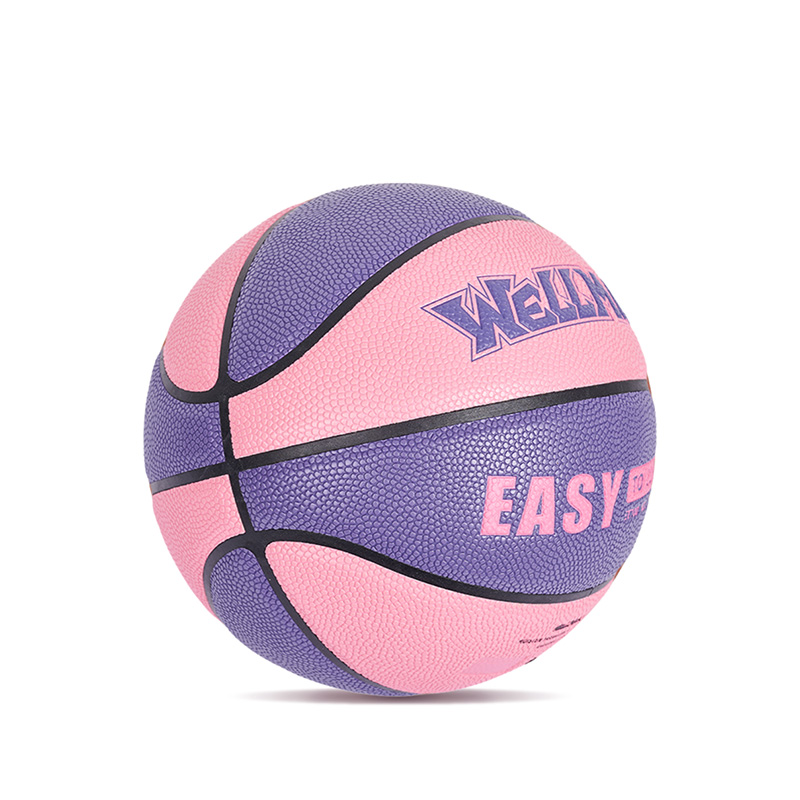 Size 5 Hygroscopic PU Leather Training BasketballA size 5 training basketball with hygroscopic PU cover and soft grip, suited to school programs and indoor or outdoor practice.View Product →
Indoor-only players can go softer still. A wave-point PU ball with a dimpled surface and a moisture-absorbing cover gives a smaller hand more contact area across the palm, which shows up in passing accuracy long before it shows up in any durability test.
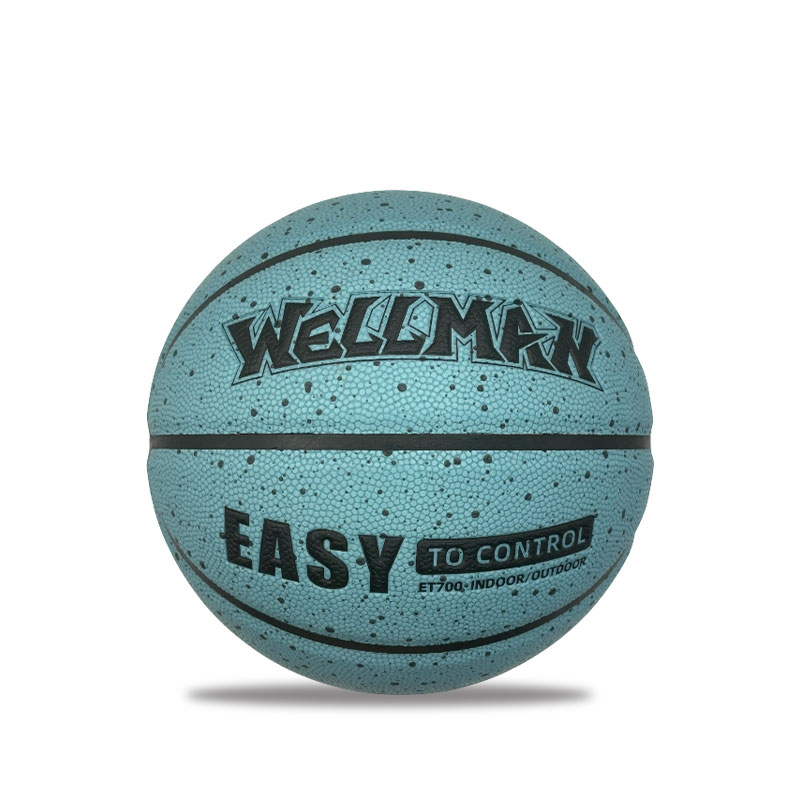 Wave Point Size 5 Indoor PU Leather BasketballA size 5 wave-point PU indoor ball with butyl foam bladder, designed for casual recreational play and easier court visibility.View Product →
Buying Size 5 Basketballs in Volume
For schools, clubs and promotional buyers, four things decide whether a bulk order of size 5 balls survives a full season.
- Consistent circumference across the batch. Ask for samples from at least two production runs. A supplier that holds a quarter-inch spread across the batch is controlling bladder pressure and panel geometry, not just cutting leather.
- Bladder retention. A butyl foamed bladder keeps pressure through a summer in storage. Latex feels better on day one and softer on day forty, which is the wrong trade for a school that buys once a year.
- Print and logo durability. Screen printing on PU leather survives abrasion better than transfer film on rubber. On a size 5 ball that gets dragged across a playground, the logo is often the first thing to fail.
- Customization lead time. Logo, color and packaging changes sit outside standard production. For a program covering several schools, order through a supplier that runs its own OEM/ODM line rather than a trading desk that forwards the request and adds a week.
Ask for three balls from three different production dates, inflate all three, and measure them. If the spread is wider than a quarter inch, the quality problem is upstream, not in your gym.
Packaging and presentation carry more weight than most buyers expect on size 5 orders, because a large share of them are promotional or gift-driven rather than competitive. Gift-boxed youth balls, printed team colors and custom pattern work all change the production route, and a manufacturer that also runs its own brand tends to have tighter control over those steps than a pure contract workshop.
Frequently Asked Questions About Size 5 Basketballs
Size 5 is the most mislabeled size in youth basketball, which is why measurement beats any product title on a listing page.
Is a size 5 basketball the same as a mini basketball?
In practice, yes. FIBA lists its Mini basketball at size 5, and most youth leagues use the two terms interchangeably. The ball measures roughly 27.0 to 27.75 inches around and weighs 14 to 17 ounces.
What age is a size 5 basketball for?
Roughly 8 to 11 years old. Retail guidance often drops the starting age to 8, while some rulebooks push it to 9. Hand size and grip strength matter more than the birthday. If a child can grip the ball one-handed along the seam, size 5 fits.
How much does a size 5 basketball weigh?
Between 14 and 17 ounces, or 400 to 495 grams. A ball under 400 grams is usually a foam or promotional product rather than a regulation youth ball, and it will not hold its shape through a season of practice.
Can adults use a size 5 basketball?
Yes, for ball handling and shooting drills. A smaller ball forces cleaner fingertip control and a higher release point, which is why size 5 balls show up in adult skill work even though no adult league plays with one.
Size 5 is not a scaled-down adult ball. It is its own specification, with its own circumference range, weight band and cover options, and the difference shows up the moment a nine-year-old tries to shoot with a ball that was never built for that hand.