

 English
 русский
 Español
 Deutsch
 عربى
عربى 中文简体
中文简体
Content
A size 4 basketball measures 25.5 inches (64.5 cm) around and weighs roughly 14 to 16 ounces (400 to 450 grams). It is the ball most youth leagues hand to players between five and eight years old, and it runs about 16 percent smaller around than the size 7 ball used by adult men.
The specification matters because of what it changes on the court. A five-year-old hand span is usually five to six inches, while a size 7 ball is 9.4 inches across. Hand a child that ball and the shooting mechanics fall apart: the ball gets pushed from the chest, the elbow drifts outward, and the guide hand does most of the work. Give the same child a size 4 and the fingertips can actually sit on the seams, which is the starting point for a one-hand shot. Coaches usually notice the change inside a single practice.
What follows is the exact specification, how size 4 compares with the rest of the range, which materials suit which court, and the checks worth running before a school, club or brand places an order.
What a Size 4 Basketball Actually Is
A size 4 basketball is a youth game ball with a 25.5-inch (64.5 cm) circumference, an inflated diameter of about 8.1 inches, and a typical weight of 14 to 16 ounces.
Two measuring habits cause most of the confusion. First, circumference is taken at the widest point, perpendicular to the seams, with the ball inflated to its rated pressure. Youth balls are normally rated at 7 to 9 psi. A ball sitting at 4 psi can measure a full inch under spec, which turns a correctly built size 4 into something that looks like a size 3. Second, circumference and diameter are not the same number. A size 4 is 25.5 inches around but only about 8.1 inches across, and that 8.1-inch figure is what decides whether a young hand can grip and control the ball.
Weight is the other variable worth pinning down. Foam and rubber size 4 balls often come in at 13 to 15 ounces, while moisture-absorbing PU or microfiber covers usually sit at 15 to 16 ounces. Heavier is not automatically better for a six-year-old. It becomes useful later, in form shooting drills for nine- and ten-year-olds, where a slightly heavier ball builds release strength.
The Full Basketball Size Range at a Glance
Size 4 sits between size 3 (22 in) and size 5 (27.5 in), and the step from size 3 to size 4 is the largest proportional jump in the youth range at roughly 16 percent more circumference.
Bar length shows circumference relative to a size 7 ball, which is the adult men standard at 29.5 inches.
| Size | Circumference | Typical weight | Age band | Rim height |
| Size 1 | 16 in (41 cm) | 8 to 10 oz | 2 to 4 | 6 ft |
| Size 2 | 18 in (46 cm) | 10 to 12 oz | 3 to 5 | 6 to 7 ft |
| Size 3 | 22 in (56 cm) | 10 to 12 oz | 4 to 8 | 8 ft |
| Size 4 | 25.5 in (64.5 cm) | 14 to 16 oz | 5 to 8 | 8 ft |
| Size 5 | 27.5 in (70 cm) | 17 to 18 oz | 9 to 11 | 9 ft |
| Size 6 | 28.5 in (72.5 cm) | 18 to 20 oz | 12 and up, girls and women | 10 ft |
| Size 7 | 29.5 in (75 cm) | 20 to 22 oz | 12 and up, boys and men | 10 ft |
Rulebooks differ slightly from the chart above. NFHS rules put girls in grades 7 through 12 on a size 6 and boys in the same grades on a size 7, while FIBA 3x3 uses a size 6 for both men and women. Size 4 rarely appears above the youth level, which is why suppliers list it as a youth, junior or mini game ball.
Why Ball Size Changes Skill Development
Ball size decides which shooting and dribbling mechanics a young player can physically execute, so moving a child up a size early tends to delay development instead of speeding it up.
The mechanics are simple enough. Fingertip control, a one-hand release and dribbling with the head up all depend on the hand being able to wrap the ball. When the ball is too large, players compensate with the palm, push the ball from the chest and keep their eyes down on the bounce. Those habits survive the eventual switch to a full-size ball and can take a whole season to unwind.
Ages 2 to 5: sizes 1 and 2
Free play, catching, rolling and basic grip work. No shooting form yet, just comfort with a ball in both hands.
Ages 4 to 8: size 3
Stationary dribbling and form shooting close to the basket, where the ball can be released with one hand.
Ages 5 to 8: size 4
Game play, one-hand shooting and the first crossover moves. This is the size most youth leagues specify.
Ages 9 to 11: size 5
Full rules on a 9-foot rim, then size 6 or size 7 from age 12 depending on the rulebook in use.
Materials and Construction: What to Buy for Which Court
For size 4 balls, rubber covers are the outdoor durability choice, composite PU or microfiber covers are the indoor grip choice, and foam balls are the school gym choice when noise and safety come first.
Rubber cover
- Best on blacktop, concrete and playgrounds
- Deeper pebble texture that resists abrasion
- Heavier feel with less grip on indoor floors
- Lowest cost per ball for outdoor programs
- No break-in period, ready from day one
Composite PU or microfiber leather
- Best on indoor wood and synthetic flooring
- Softer touch with better moisture handling
- Needs a short break-in period of a few sessions
- Higher cost, grip fades with heavy outdoor use
- Available in 8-panel and 16-panel builds
Panel count matters more than most buyers expect. An 8-panel size 4 ball has fewer, wider panels, which gives beginners a predictable release point. A 16-panel ball with deeper channels behaves closer to a competition ball and rewards players who already have reasonable hand control.
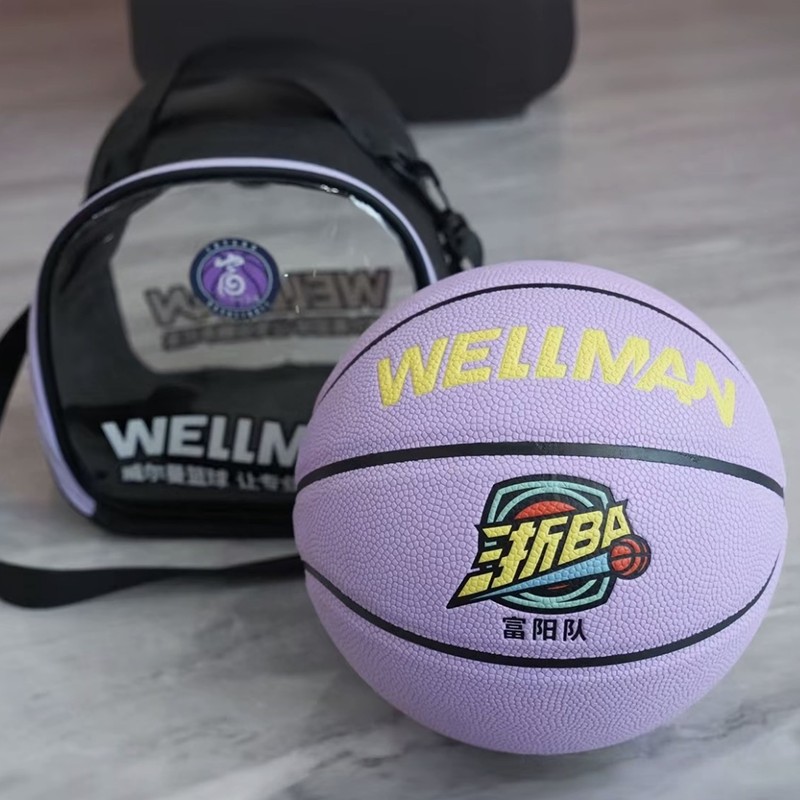 OEM ODM Custom Order Kids PU Basketball Size 4 Moisture Absorbing Safe Eco-friendly ThermaChildren's Safety Basketball No.4View Product →
The bladder inside decides how often the ball needs air. Butyl bladders hold pressure well and suit school storage rooms where balls sit for weeks at a time. Latex bladders feel softer and bouncier but lose pressure faster, so they fit programs that inflate and check their equipment every session.
Program Purchasing: Quantities, Color Coding and Durability
A program buying size 4 balls should budget one ball for every two players in a session, color-code by size so the wrong ball never reaches the wrong drill, and expect a mid-grade PU ball to hold usable grip for roughly 30 to 50 indoor sessions.
- Quantity math. In a 20-player session built around pair drills, ten balls keep everyone moving. For shooting stations, one ball per player is the realistic figure, because a queue at the rack kills repetition counts.
- Color coding. Assign one cover color per size. Coaches then spot a size 3 mixed into a size 4 drill from across the gym, and end-of-term inventory checks take minutes rather than an afternoon.
- Size marking. Confirm the size is printed or permanently marked on the ball itself, not just the packaging. Youth programs lose balls between sizes constantly and boxes disappear in the first week.
- Rotation and storage. Keep stock inflated to 7 to 9 psi, rotate older balls into practice use, and retire a ball once the pebble texture has worn smooth in the main playing area.
Programs that buy by the case often run into a second problem: the ball that survives a full school year outdoors is rarely the ball that feels right in a gym. Splitting the order between a rubber set for outdoor sessions and a leather set for indoor work usually outlasts a single compromise purchase. The same logic applies to training basketballs for schools, where mixed indoor and outdoor use is the norm.
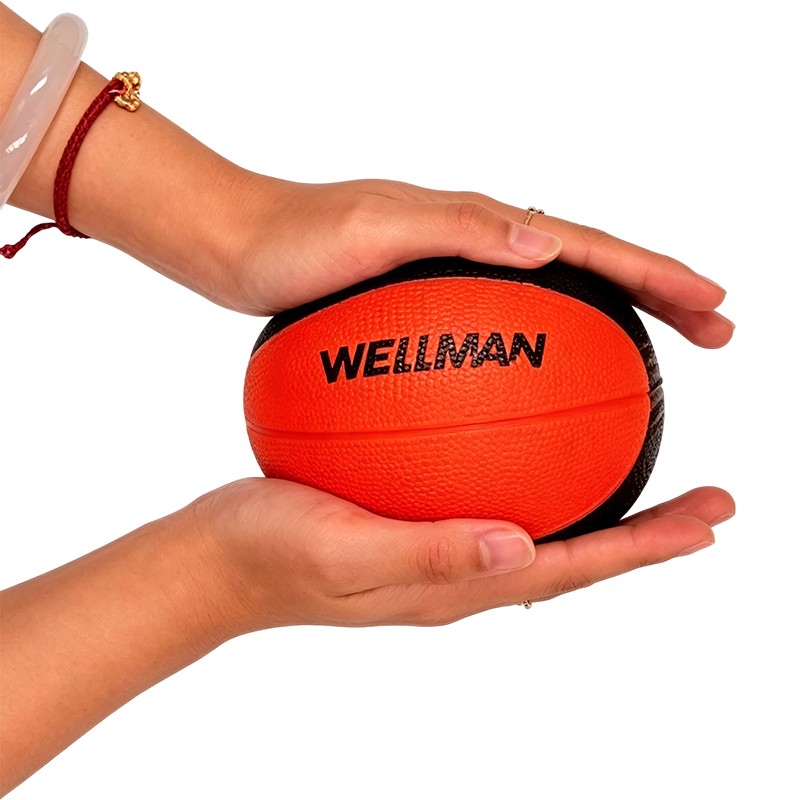 Noise-free foam basketball, high rebound for kids indoor training, custom children patternCustomizable Design We support custom kids cartoon patterns, logos and two-tone color matching. Personalized printing service helps you create exclusive merchandise fo...View Product →
Custom and OEM Size 4 Basketballs
A custom size 4 order normally specifies circumference tolerance, weight class, cover material, panel count, print method and packaging, and most factories will not open a run for fewer than a few hundred pieces.
What to specify
- Circumference 25.5 in with a stated tolerance, for example plus or minus 0.2 in
- Weight class, for example 14 to 16 oz with a tolerance of plus or minus 0.5 oz
- Cover material: rubber, PVC, composite PU or microfiber
- Panel build of 8 or 16 panels
- Logo method: screen print, heat transfer or embossed
- Packaging: poly bag, display box or gift box
What to verify on the sample
- Measured circumference after inflating to 7 to 9 psi
- Actual weight on a shipping scale, not the spec sheet
- Grip after 20 minutes of use rather than straight out of the bag
- Seam alignment and channel depth across all panels
- Ink adhesion after a wet wipe test
- Permanent size marking on the ball surface
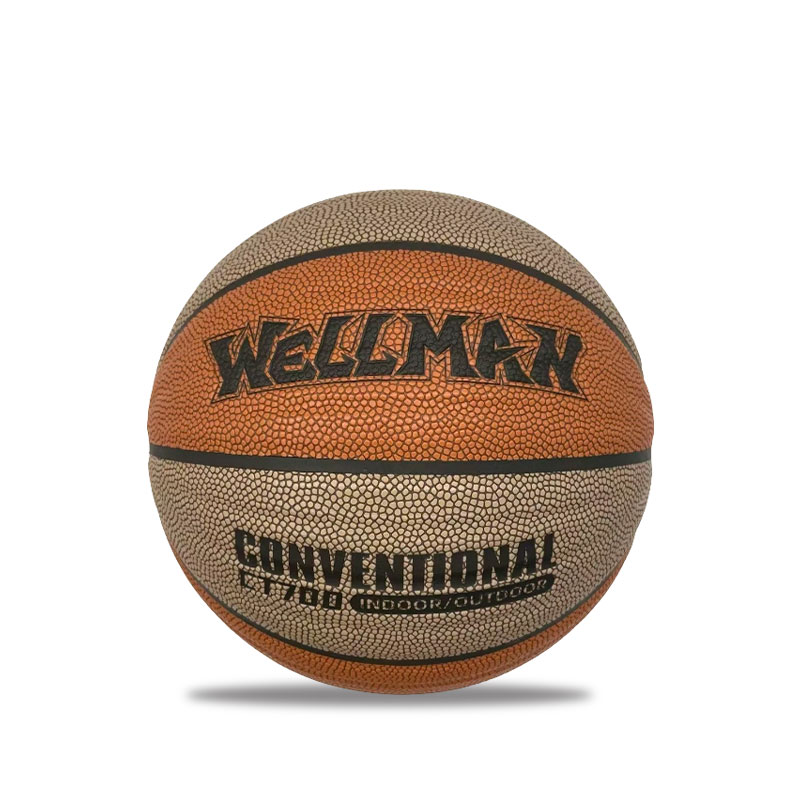 Color Blocking Design Customized LOGO 1.6pu Leather Children's Team Sports EquipmentIntroducing the color-blocked PU custom logo basketballView Product →
For clubs, the most common custom request is not a logo at all. It is a color-blocked ball with the size printed on the surface and a slightly heavier weight class for older youth players, which is one reason children range balls are produced across sizes 1 to 6 rather than as a single youth model. Buyers who need logo printing, panel color selection and size grading in one order can review the full OEM/ODM program before requesting samples.
Frequently Asked Questions
What age group should use a size 4 basketball?
Most programs use size 4 for players aged five to eight. Younger players in structured classes, from about age four, can move to it once they can grip a size 3 comfortably and release a shot with one hand.
Is a size 4 basketball the same as a mini basketball?
No. Mini and novelty balls are usually sizes 1 to 3, measuring 16 to 22 inches around. A size 4 is 25.5 inches and is built as a game ball with a full cover, a proper bladder and a rated inflation pressure.
Can a size 4 ball be used on a 10-foot rim?
It can be, but it should not be the default setting. Programs that pair size 4 balls with 8-foot rims get cleaner shooting form. A 10-foot rim works better once players have moved up to a size 5 ball.
How do I confirm a ball is really a size 4?
Inflate it to 7 to 9 psi, measure the circumference at the widest point perpendicular to the seams, then weigh it. A true size 4 should read close to 25.5 inches and land between 14 and 16 ounces.