


 English
 русский
 Español
 Deutsch
 عربى
 中文简体

Content
An eight-year-old who has to push a full-size ball at the rim with both hands is not learning a jump shot, they are learning to work around equipment that does not fit. The correction costs less than a pair of shoes. For most eight-year-olds the right ball is a Size 5: 27.5 inches around, roughly 16 to 18 ounces, and paired with an 8-foot hoop.
Size 5 basketball, 27.5 in (69.8 cm) circumference and 16-18 oz (450-510 g). Choose Size 4 only if the child is small for their age, in a first season, or playing under a league rule that mandates it.
The Short Answer: Size 5, 27.5 Inches Around
A Size 5 basketball is the standard for eight-year-olds in nearly every youth league, and it is the size USA Basketball names for the 7-8 age bracket, together with an 8-foot rim and a reduced court.
The table below is the practical version of that rule. Circumference decides whether a child can grip and control the ball. Weight decides whether they can shoot it without rebuilding their form around the equipment.
| Ball size | Circumference | Typical weight | Age band | Practical use |
| Size 3 | 22 in / 56 cm | 10 oz | 4-6 | Mini ball, dribbling and hand-eye drills |
| Size 4 | 25.5 in / 65 cm | 14 oz | 5-8 | Small or first-year eight-year-olds |
| Size 5 | 27.5 in / 70 cm | 16-18 oz | 8-9 | The default for eight-year-olds |
| Size 6 | 28.5 in / 72 cm | 20 oz | 9-11 boys, women | Usually too heavy at eight |
| Size 7 | 29.5 in / 75 cm | 22 oz | 12+ boys, men | Adult ball, not for this age group |
For the full age and grade breakdown, including women's and high school specifications, the official basketball size chart by age covers every size in detail.
When a Size 4 Is the Better Call
A Size 4 is the better choice when the child is small for their age, new to organized basketball, or playing in a division whose rulebook specifies Size 4 for the 8-and-under group.
Published charts are the reason parents hesitate. Many list Size 4 for ages 5 to 8 and Size 5 for ages 8 to 9, so an eight-year-old lands exactly on the seam between the two recommendations. Both answers are defensible. The tiebreakers are physical and situational, not calendar-based.
Size 4 fits when
- The league rulebook lists Size 4 for the 8-and-under division
- The child stands well under 50 inches and has small hands
- The ball slips out during a normal one-hand shooting motion
- This is a first season and confidence matters more than specification
Size 5 fits when
- The child plays in an 8-9 or 9-and-under division
- The ball rests at hip height when held in both hands
- Ten dribbles per hand happen without looking at the floor
- Next season includes school team or club tryouts
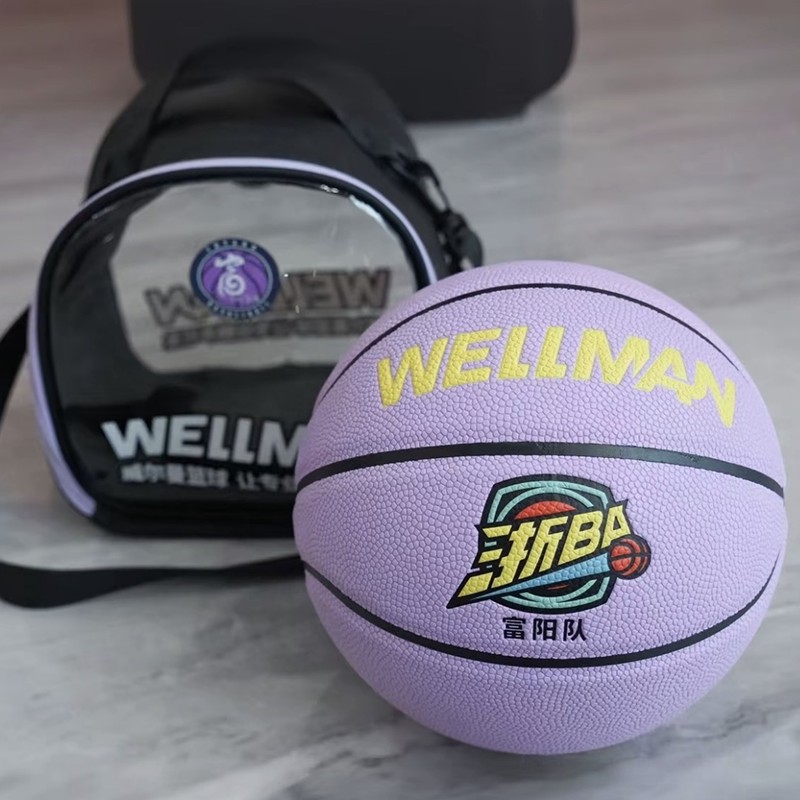 Size 4 Children’s PU Basketball with Carrying BagMoisture-absorbing PU cover and soft touch suit young beginners practicing dribbling, passing, and shooting; includes a carrying bag for storage.View Product →
Four Fit Checks That Take Two Minutes
You can confirm the right size in a store aisle without a tape measure by running four checks in sequence.
- Waist check. Held in both hands against the stomach, the ball should sit at hip or waist height. If it reaches the lower ribs on an eight-year-old, it is a Size 6 or larger.
- Grip check. Ask the child to hold the ball one-handed at chest height for two seconds. Few eight-year-olds can palm a Size 5 either, but they should be able to cup it against the body without it rolling away.
- Dribble check. Ten dribbles with each hand while looking at you rather than at the floor. Control at speed separates a fit from a near-fit.
- Shoot check. On an 8-foot rim the release should be one hand above the head with the elbow under the ball. A two-handed push from the chest means the ball is too heavy, too large, or both.
Weight and Cover Material Matter as Much as Diameter
Two balls measuring 27.5 inches can feel completely different in small hands, because weight and cover material decide whether a child can shoot with one hand and keep a grip in a warm gym.
Weight is the most common mistake in youth purchases. A 20-ounce Size 6 is only an inch larger than a Size 5, but the extra mass pulls the shooting arc down and turns a one-hand release into a two-hand shove. If a ball feels heavy when you pass it to a child, it is heavy for them.
The cover matters just as much in practice. Moisture-absorbing composite or PU covers hold grip once hands get sweaty, which is why most indoor youth balls use them. Rubber covers survive asphalt but feel slick on a clean hardwood floor, and deep channel designs give smaller fingers something to lock into.
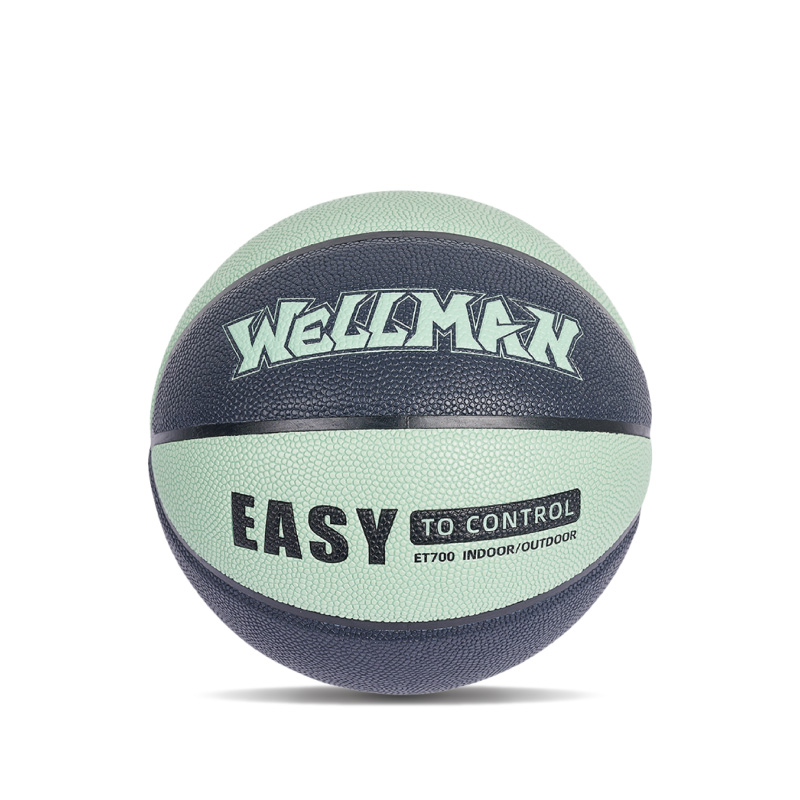 WELLMAN Size 5 Hygroscopic PU Training BasketballMoisture-wicking PU cover and abrasion-resistant surface support teen and adult training indoors or outdoors, while balanced construction gives consistent bounce for shooting and ball-handling.View Product →
Match the cover to the surface the child actually plays on, because the wrong cover either slides on hardwood or wears smooth on concrete within a single season.
- Indoor hardwood: moisture-absorbing composite or PU cover, kept clean and dry, with deep channels for finger grip. Reserve it for the gym.
- Outdoor driveway: rubber or a tough composite cover with a pebbled surface. Expect a harder feel, faster wear, and a shorter useful life on rough concrete.
- Shared gym or apartment court: a foam or noise-reduced ball with a lower rebound, which keeps neighbours and coaches onside and reduces the chance of the ball being banned from the hall.
One good indoor ball and one cheap outdoor ball almost always outlast a single ball used for both. Grit picked up outdoors grinds into a soft cover and quietly destroys the grip you paid for.
 Noise-Free Foam Indoor Training Basketball for KidsLightweight PU foam ball stays quiet indoors, and high-rebound foam supports basic dribble practice for toddlers and young children without hard-impact risk.View Product →
Buying Ten Balls Instead of One
Programs buying for a whole age group should standardize on Size 5 and specify weight tolerance and cover material in the purchase order, not just diameter.
- Weight tolerance: ask for 16-18 oz across the batch. A run that drifts to 20 oz changes how thirty children shoot.
- Valve and inflation quality: cheap valves leak, and a flat ball on a Friday session is a coaching problem, not a manufacturing footnote.
- Printing and numbering: school or club logos, plus a size marking on the ball so volunteers stop guessing at the equipment cart.
For clubs, schools, and retailers, custom youth basketball programs usually cover size, weight, cover material, colour, logo, and packaging in one order, which keeps a whole age group on the same specification. Details of custom OEM and ODM production are worth reviewing before the next season's budget is signed off.
Frequently Asked Questions
Is Size 5 or Size 6 better for an eight-year-old?
Size 5. A Size 6 measures 28.5 inches and weighs around 20 ounces, which is designed for nine-to-eleven-year-old boys and for women's play. Most eight-year-olds lose shooting form with that extra weight.
What size basketball does an eight-year-old girl use?
Size 5 as well. Girls' leagues typically move to Size 6 at nine to eleven and stay there through adult competition, so the eight-year-old starting point is identical for both boys and girls.
How high should the hoop be for an eight-year-old?
Eight feet for the 7-8 age bracket in youth guidelines, against the 10-foot regulation rim. A Size 5 ball shot at a 10-foot rim forces a heave that undoes months of technique work.
How much should a youth basketball weigh?
A Size 5 should weigh between 16 and 18 ounces, or roughly 450 to 510 grams. Weigh a ball on a kitchen scale if the packaging gives no figure; the difference between 17 and 21 ounces is obvious once a child shoots with it.