


 English
 русский
 Español
 Deutsch
 عربى
عربى 中文简体
中文简体
Content
An NBA game is played with a size 7 basketball: 29.5 inches (75 cm) in circumference, 20 to 22 ounces (567 to 650 grams) on the scale, and inflated to between 7.5 and 8.5 psi. Those numbers are worth knowing by heart whether you are a coach equipping a program, a distributor planning a wholesale order, or a parent buying a child's first ball. The most common sizing mistake we see on courts and in buyer inquiries is a simple one: a player trains for months with a ball that is too large or too heavy for their hands, then wonders why the shot falls short on a regulation rim. The sections below give you the complete NBA basketball size breakdown, the full chart for every age level, and the practical reasons behind each number, so you can match the ball to the player instead of guessing.
The Official NBA Basketball Size and Specifications
The official NBA game ball sits in the size 7 category and must meet these measurements:
- Circumference: 29.5 inches (75 cm)
- Weight: 20 to 22 ounces (567 to 650 grams)
- Diameter: roughly 9.4 inches, just over half of the rim opening
- Air pressure: 7.5 to 8.5 pounds per square inch
- Cover: smooth leather designed for professional indoor play
The 29.5-inch figure is not arbitrary. A regulation rim is 18 inches across, so the ball fills just over half of that space and two balls can never pass through at once. That ratio is what keeps scoring challenging without becoming luck-based. International play under FIBA uses the same size 7 class with slightly wider tolerances, 749 to 780 mm in circumference and 567 to 650 grams in weight, which means a ball built for NBA-style play also satisfies international dimensions.
Pressure matters as much as circumference. At 7.5 to 8.5 psi the ball rebounds within a predictable band when dropped on hardwood, which is why officials verify it before tipoff. If a ball feels dead in your hands, or uncomfortably hard, the size is rarely the problem; the inflation usually is.
For players and programs that want a ready-made benchmark, a professional size 7 with a butyl foamed bladder is built to exactly these numbers, and the bladder's low air loss keeps the pressure in range between sessions:
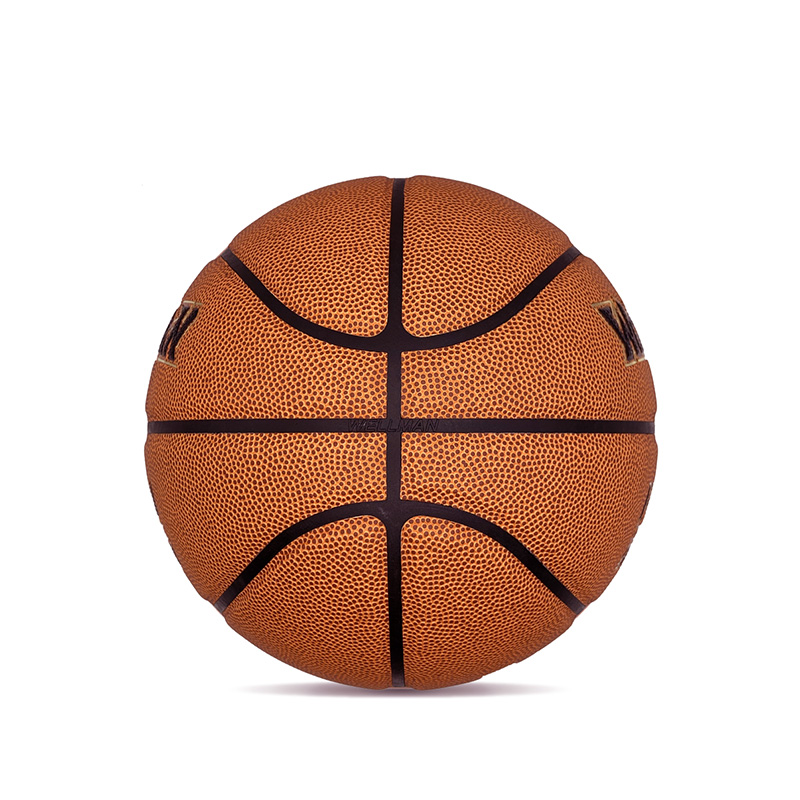 Official Size 7 Professional Basketball with Butyl Foamed BladderA professional size 7 basketball built to standard circumference and weight specifications, with a butyl foamed bladder that holds pressure between sessions—useful as a ready-made benchmark for male players from about age 13 upward.View Product →
Basketball Size Chart by Age and Level
Size 7 is the standard for male players from about age 13 upward, but it is only one step on a five-size scale. The chart below consolidates the specifications published by major size guides and youth basketball programs.
| Size | Circumference | Weight | Typical players |
|---|---|---|---|
| 7 | 29.5 in / 75 cm | 20-22 oz / 567-650 g | Men and boys 13 and up; NBA and men's college play |
| 6 | 28.5 in / 72 cm | 18-20 oz / 510-570 g | Women and girls 12 and up; WNBA and women's college play; boys 9-12 in many programs |
| 5 | 27.5 in / 70 cm | 16-18 oz / 454-510 g | Youth players around ages 9 to 11 |
| 4 | 25.5 in / 65 cm | About 14 oz / 400 g | Children roughly ages 4 to 8 |
| 3 | 22 in / 56 cm | About 10 oz / 283 g | Preschoolers and toddlers; also sold as mini souvenir balls |
Two details in this chart deserve attention. First, the age bands overlap: a 12-year-old boy may be assigned size 6 in one league and size 5 in another, so schools and clubs are better off stocking both. Second, weight drops faster than circumference. A size 5 ball is 2 inches smaller than the NBA ball but 4 to 6 ounces lighter, and that weight gap is what protects young wrists and keeps shooting mechanics developing correctly.
Why the NBA Ball Measures 29.5 Inches
The league's dimensions were settled through more than a century of trial, and the logic still holds at three levels.
Hand coverage comes first. An adult male hand typically spreads about 8.5 to 9 inches from thumb to little finger, and a 29.5-inch ball sits comfortably across that span with the fingers resting on the channels. Players whose hands reach 10 inches or more can palm the ball outright, which changes how they cradle it on drives and rebounds. Shrink the ball and handling becomes trivial; enlarge it and one-hand control slips away from most players.
Shooting geometry is the second reason. With a 9.4-inch ball in an 18-inch rim, there is about 4.3 inches of clearance on each side of a perfectly centered shot. That margin rewards a soft touch without forgiving a sloppy arc. Small equipment changes have been measured against this balance for decades, and when a synthetic-cover experiment in the mid-2000s disrupted grip, the league dropped it within a single season.
Consistency is the third. The rulebook pins the specification so a shot practiced in one arena behaves the same in another. Players notice even minor changes: when the game ball contract changed hands for the 2021-22 season, grip and feel dominated preseason conversation for weeks. The dimensions themselves trace back to the sport's origins — the first game in 1891 was played with a soccer ball — but once panels, channels and the 29.5-inch circumference were standardized, they became part of the game's physics.
Size 6, Size 5 and Youth Basketball Sizes
Size 6: The Women's and Intermediate Standard
The WNBA and women's college basketball use a 28.5-inch ball weighing 18 to 20 ounces. The one-inch and two-ounce reduction from the men's ball is deliberate: it preserves one-hand control and proper shooting form for hands that average slightly smaller, without altering the fundamental geometry of the game. Boys between roughly 9 and 12 also play with size 6 in many programs before moving up. For schools and training facilities that run mixed sessions, keeping both sizes in the equipment room is the practical answer, and a moisture-absorbing PU size 6 built to the 510-570 gram women's standard handles hours of daily drills without turning slick:
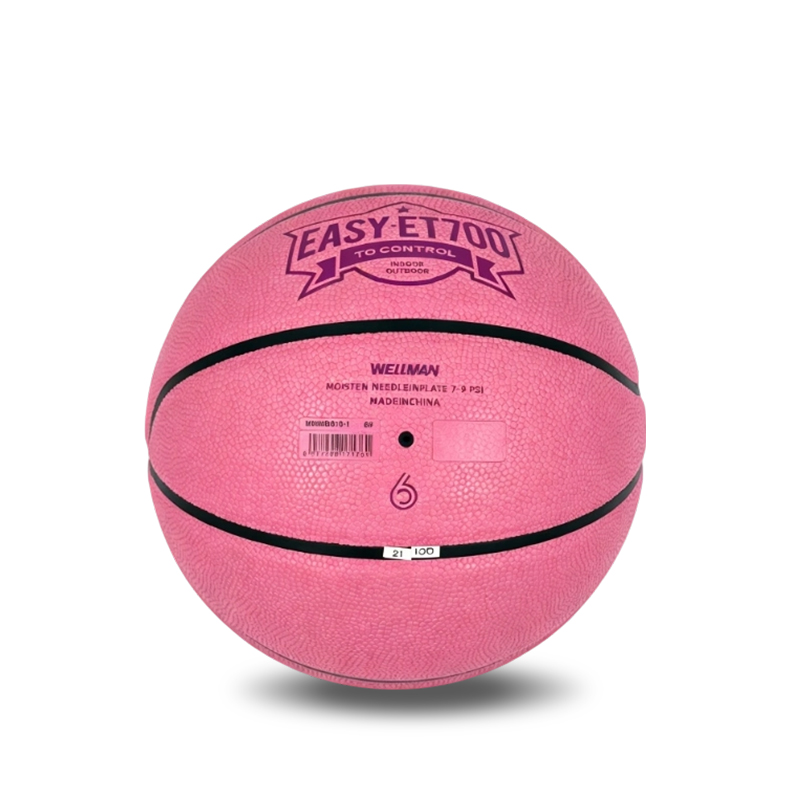 Size 6 Moisture-Absorbing PU Basketball for Women's Standard PlayBuilt to the 28.5-inch women's standard of 510–570 grams, this hygroscopic PU size 6 ball keeps a non-slip grip through hours of daily drills—practical for mixed sessions in schools, clubs, and training facilities.View Product →
Size 5 and Below: Where Good Shooting Habits Start
Youth coaches are blunt about young players using full-size balls: a 22-ounce ball in a nine-year-old's hands produces a two-handed push shot, a low release point, and habits that take seasons to unlearn. A size 5 ball at 27.5 inches and 16 to 18 ounces lets a young player reach the rim with a natural one-hand motion. Sizes 4 and 3 continue the same logic for children under 8 at lighter weights. Foam and silent versions of these small sizes have also become popular for indoor home practice, because they keep the youth dimensions while softening both bounce and noise. The same sizing logic applies to custom orders for kindergartens and primary schools, where a size 5 kids' training ball in moisture-wicking PU is the usual starting point:
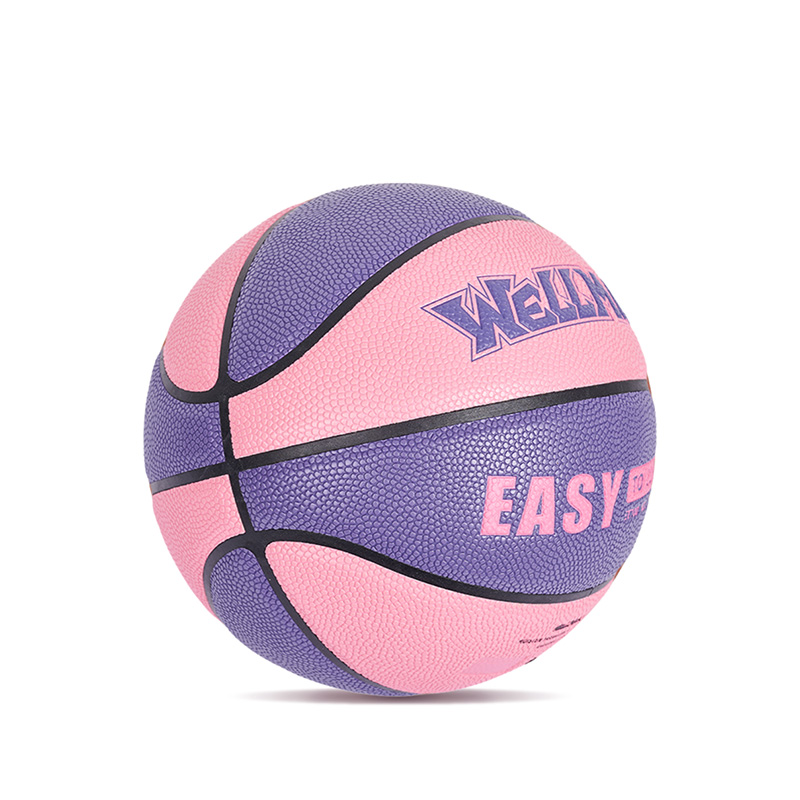 Size 5 Kids' Training Basketball in Moisture-Wicking PU LeatherA size 5 training ball at youth dimensions, made with moisture-wicking PU for a dry, secure grip. It lets young players shoot with natural one-hand form and is a common starting point for school and kindergarten programs.View Product →
What to Verify Before Buying or Ordering
Circumference is only one acceptance criterion. Three checks separate a ball that passes a spec sheet from one that still performs after a month of use:
- Pressure retention. Inflate to 8 psi and recheck after 48 hours; a butyl bladder should lose almost nothing, while a weak bladder drops measurably. If you are unsure how to judge the result, this guide on how to determine if a leather basketball is properly inflated walks through the gauge and bounce method step by step.
- Weight against circumference. Low-cost production sometimes passes the tape test while sitting at the bottom of the weight band. A kitchen scale settles the question in seconds; anything under 567 grams for size 7 is out of spec.
- Cover material matched to the venue. Full-grain leather plays best indoors and needs a break-in period; moisture-wicking composite PU suits indoor-outdoor gyms; rubber remains the economy choice for asphalt. Matching the cover to the court surface affects lifespan more than any other single decision.
For teams, schools and distributors, size is also a customization variable. Logo printing, custom colors, non-standard weights and mixed-size cartons are routinely handled through the OEM and ODM custom basketball service, which is how a program ends up with the exact size mix it needs while carrying its own identity on every panel.
The summary is short. NBA play runs on a size 7 ball of 29.5 inches, 20 to 22 ounces and 7.5 to 8.5 psi, and every other size exists to prepare players for that standard at the right stage of development. Choose the circumference that matches the player's hands and age, confirm weight and pressure rather than trusting the packaging, and pick the cover for the court it will actually see. Do those three things and the ball stops being a variable in shooting practice; it becomes the constant that professional players treat it as.