


 English
 русский
 Español
 Deutsch
 عربى
 中文简体

Content
A 270 g indoor ball passed to a group of nine year olds clears a gym faster than any drill. Within ten minutes the forearms are pink, the overhand serves never reach the net, and half the group has drifted toward the water bottles.
Kids volleyball is not adult volleyball played by shorter people. The ball, the net, the court and the scoring rules have to shrink together, and the ball is the piece most programs get wrong because it is ordered in bulk, from a catalogue, by someone reading a size number instead of a weight.
A youth volleyball is a lighter, softer covered ball, typically 200 to 250 g instead of the 260 to 280 g adult standard, chosen so a child can finish an overhand serve, pass a driven ball without pain, and still want to come back next week.
What drains the fun
- Adult size 5 ball at full pressure handed to ages 8 and under
- Hard rubber cover used indoors on a wooden floor
- Net left at adult height for a 10 year old group
- Six a side on a full court, so each child touches the ball twice a set
What turns the corner
- Lite ball in the 200 to 230 g range
- Soft PU cover with recessed, even seams
- Net at 6 ft 6 in for 10U, raised as the group grows
- Three a side on a 7 m court, thirty or more contacts per child
Ball Weight and Size Decide Almost Everything Else
Match the ball to age and hand size first, because net height, drill design and even whether a child keeps playing all follow from that one choice.
A regulation size 5 volleyball measures 65 to 67 cm around and weighs 260 to 280 g. That is wider than many eight year olds can comfortably wrap a hand around, and heavy enough that a mistimed pass stings. A lite ball drops 30 to 60 g of mass while keeping a similar circumference, which slows the ball in the air, softens contact and lets a small arm swing actually finish a serve.
| Age band | Typical ball | Weight | Circumference | Net height |
| 5 to 7 | Foam or mini lite | 150 to 200 g | 60 to 63 cm | 6 ft 0 in |
| 8 to 10 | Lite size 5 | 200 to 230 g | 63 to 65 cm | 6 ft 6 in |
| 11 to 12 | Lite or standard size 5 | 230 to 260 g | 65 to 67 cm | 7 ft 0 in |
| 13 and up | Standard size 5 | 260 to 280 g | 65 to 67 cm | 7 ft 4 in |
Some leagues run a smaller ball for ages 10 and under and move up at 11 or 12, while others stay on a lite size 5 the whole way. If your program is deciding between the two, this comparison of size 4 versus size 5 volleyballs walks through how each behaves on serve, pass and overhead contact.
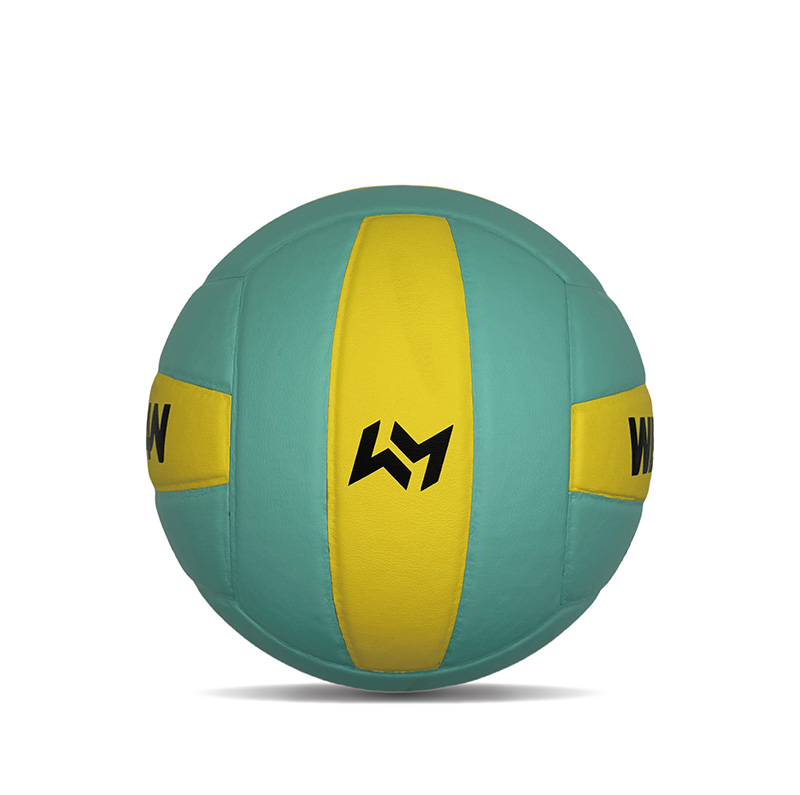 Soft Touch PU Leather Size 5 VolleyballA size 5 PU leather volleyball with a listed 240–280 g weight, useful when comparing league size options and checking actual ball weight.View Product →
Weight is the number to check on a spec sheet, not the size number printed on the box. Two balls both labelled size 5 can differ by 60 g, and that gap is exactly what a nine year old feels on every single contact.
Cover Material and Construction Decide How Contact Feels
Cover softness decides how the ball feels on a forearm, and construction decides whether it still feels that way after thirty sessions.
Soft PU
The default for beginners. Grippy, forgiving on contact and easy to wipe clean. Look for a padded backing rather than a thin skin that bottoms out after one season.
Microfiber and composite
Club and school level. Tighter surface, more consistent flight and less moisture pickup over a long practice. Higher cost per ball, longer service life.
Rubber
Outdoor, recess, beach and gym floor overflow. Durable and cheap, but the hardest on young forearms. Keep it out of indoor beginner sessions.
Panel count and seam depth matter more than the marketing copy suggests. Indoor volleyballs commonly use 18 panels with recessed seams, and a deep, even seam gives small fingers something to grip on a pass. A shallow seam on a hard cover is the combination that produces the classic red forearm after a first practice.
In humid gyms and summer camps, a moisture absorbing PU cover is worth the small price difference, because a slick ball forces kids to swing harder to control it, and harder swings fail more often.
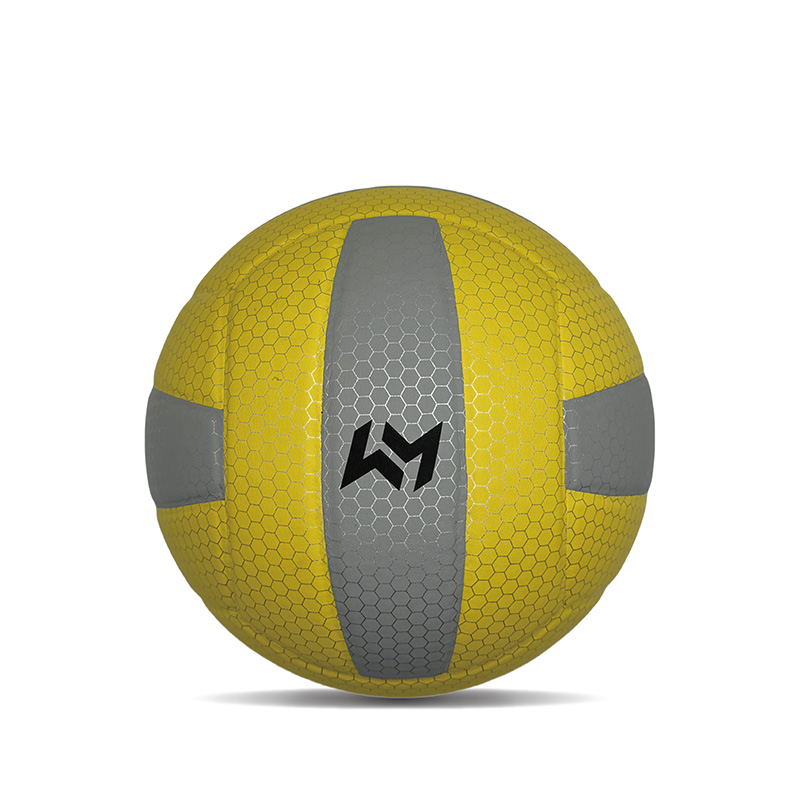 Honeycomb PU Thermal Bonded Size 5 VolleyballA size 5 honeycomb PU volleyball with thermal bonding and bright multi-color options, worth checking for grip and beginner handling in humid gyms.View Product →
Soft does not mean foam soft. A beginner ball should compress slightly under thumb pressure at the seam and still snap back into shape when squeezed in one hand.
Lower the Net, Shrink the Court, Then Adjust the Rules
Scaling the equipment only works when the net, the court and the rules move at the same time as the ball.
- Measure the net at the centre of the court, not at the posts. Use 6 ft 6 in for ages 10 and under, 7 ft 0 in for 11 and 12, and full height from 13 upward.
- Shrink the playing area to about 7 m by 7 m per side for three a side and four a side. A short court rewards control and removes the temptation to blast every third touch.
- Set pressure with a gauge before the session starts. Most indoor balls sit near 0.30 kg/cm2, and a soft ball at 0.25 kg/cm2 feels kinder on small hands without turning dead.
- Modify the rules for the youngest groups: allow a catch and toss for ages 6 to 8, serve from a shorter line, and rotate on every serve so nobody camps in one spot.
Small sided games are the cheapest coaching upgrade available. In three a side on a short court, a child touches the ball three to four times more often per session than in six a side, and every one of those touches is a rep that no line drill can replicate.
Buying for a School, Club or Camp
Buy by weight class and cover first, then budget for replacement rather than for one large opening order.
Relative service life index based on surface abrasion and weekly hours of use.
- Weigh a sample ball before signing off on a bulk order, and record the figure against the invoice.
- Keep two weight classes on hand if your program spans ages 8 to 13, rather than forcing one ball on everyone.
- Check whether the cover is rated for indoor or indoor and outdoor use, because shared gym and playground use wears seams fast.
- Ask for the valve type and spare needle supply, since a program loses more balls to valve damage than to worn covers.
Programs that want matching club colours, printed logos or numbered balls for a camp set can review the custom manufacturing options before committing to a season order, because minimum quantities and lead times change the maths on a small budget.
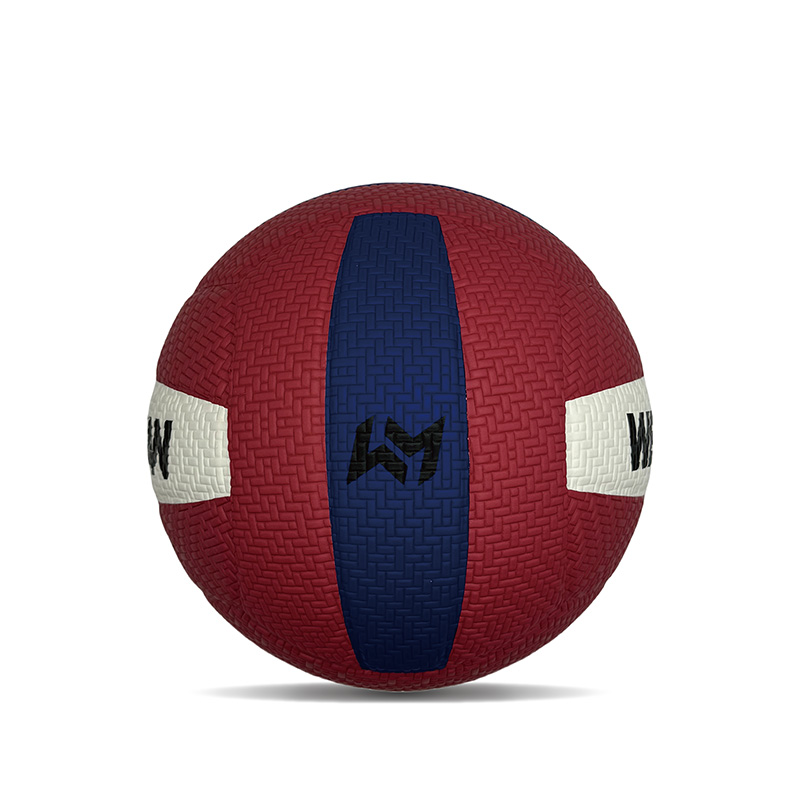 Moisture-Absorbing Woven Pattern Size 5 VolleyballA moisture-absorbing woven-pattern PU size 5 volleyball with listed 240–280 g weight, suitable for testing before a larger program order.View Product →
Order one ball first. Weigh it, inflate it to 0.30 kg/cm2, and let three kids pass it for ten minutes before you commit to a forty ball purchase order.
Inflation, Storage and When to Retire a Ball
Check pressure every two weeks and store balls at moderate temperature, because most dead youth volleyballs are simply under inflated or worn smooth at the seam.
- Use a gauge, not a thumb. A ball that feels firm at 0.28 kg/cm2 and one at 0.35 kg/cm2 feel similar by hand and behave completely differently off a forearm.
- Reinflate in small steps and let the ball rest an hour, since over inflation stretches the bladder and shortens the life of the cover.
- Store away from radiators, car boots and direct sun, all of which harden PU covers and speed up cracking at the seams.
- Wipe with a damp cloth and mild soap, then dry fully before storage, because trapped moisture softens the lamination.
A youth ball that has gone shiny across the panels has lost its grip surface, and replacing it costs less than the drills that fail because every pass slips.
Common Questions from Parents and Coaches
What size volleyball should an 8 year old use?
Most 8 year olds do best with a lite ball weighing 200 to 230 g, with a circumference around 63 to 65 cm. A full weight adult ball is workable for a strong 8 year old but usually shortens the practice and the enthusiasm.
Is a lighter ball allowed in league play?
It depends entirely on the rulebook. Recreational and school leagues commonly permit lite balls for younger divisions, while sanctioned competition usually specifies a standard size 5 at 260 to 280 g, so check before buying a team set.
How many balls does a youth program actually need?
Plan for six to eight balls per group of twelve so rotation drills keep everyone moving, plus two or three replacement balls per ten each year for valve failures and worn covers.
Can kids play beach volleyball with an indoor ball?
They can, but the cover will scuff quickly on sand and the bounce changes noticeably in wind. A dedicated beach ball with a slightly softer, water resistant cover holds pressure and grip far better across a summer season.
The single fastest improvement to a struggling youth session is usually a lighter ball and a lower net, not a new drill.