


 English
 русский
 Español
 Deutsch
 عربى
عربى 中文简体
中文简体
Content
A player who joins a weekly beach pickup group usually asks the same question within the first month: why does the borrowed ball feel so much softer off the forearms than the one sitting in a gym bag? The answer has nothing to do with luck. Beach volleyballs are engineered differently from indoor balls — slightly larger, inflated to roughly half the pressure, and covered in materials chosen to survive sand, salt air, and direct sun. Buy with those differences in mind and a ball lasts seasons; ignore them and even an expensive ball turns passing drills into a test of pain tolerance.
This guide covers the specifications that matter, the materials and construction methods that hold up in beach conditions, how to match a ball to a use case, and what clubs, schools, and wholesale buyers should verify before committing to a volume order.
What Separates a Beach Volleyball From an Indoor Ball
A regulation beach volleyball is a size-5 ball, but not every size-5 ball works well on sand. Since the sport joined the Olympic program in 1996, specifications have settled on a 66–68 cm circumference — about a centimeter larger than the indoor ball — with the same 260–280 g weight range and far lower air pressure: 0.175–0.225 kg/cm² versus 0.30–0.325 kg/cm² indoors. That pressure gap is the most important number on this page. A softer ball deforms on contact, spreading the impact across more forearm surface and producing a slower, more controllable touch in wind and on deep, shifting sand.
| Specification | Beach Volleyball | Indoor Volleyball |
|---|---|---|
| Circumference | 66–68 cm | 65–67 cm |
| Weight | 260–280 g | 260–280 g |
| Internal pressure | 0.175–0.225 kg/cm² (about 2.5–3.2 psi) | 0.30–0.325 kg/cm² (about 4.3–4.6 psi) |
| Typical cover | Soft PU or composite leather | Firmer laminated PU |
| Typical construction | Machine stitched; thermal bonded versions available | Machine stitched or thermal bonded |
| Panel count | Commonly 18 or fewer | Commonly 18 |
The table explains why the two balls are not interchangeable. Inflate a beach ball to indoor pressure and it stings; drop an indoor ball to beach pressure and it flies unevenly, because its stiffer cover and internal construction were never designed to perform that soft. Competitive beach play also runs two-a-side, so each ball absorbs far more contacts per player than an indoor rotation — one more reason durability expectations differ.
Materials and Construction That Hold Up on Sand
Cover materials
Three cover materials dominate the category. PU leather offers the softest touch and the most reliable grip when hands are sweaty or damp, which is why it appears on most training and match balls. PVC costs less and resists abrasion, but it stiffens in cool morning conditions, so it suits casual and recreational play more than competition. Microfiber and composite PU sit at the premium end, delivering the closest feel to a professional match ball. In humid coastal climates, moisture management matters as much as softness: a woven cover that disperses sweat keeps grip consistent through long rallies where a glossy surface turns slippery.
woven-pattern moisture-absorbing PU volleyball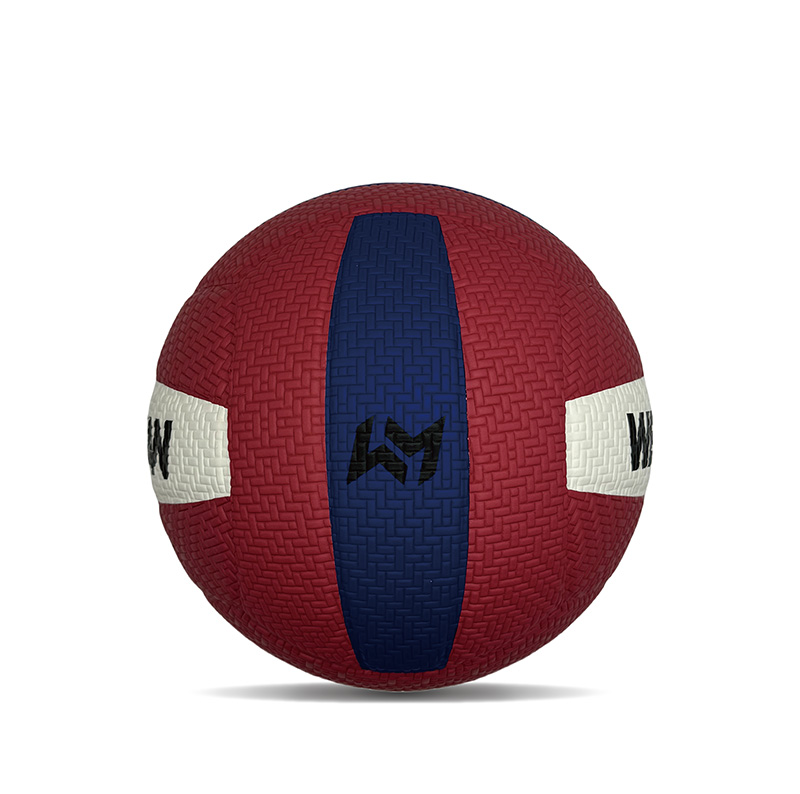 Woven Pattern Moisture-Absorbing Sport Original PU Leather Volleyball BallWith the Woven Pattern Moisture-Absorbing PU Leather Volleyball, designed for athletes who demand both performance and enduring durability. Crafted with meticulous att...View Product →
Seams and panels
Machine stitching remains the default for beach play because stitched seams flex under repeated impacts and tolerate grit working into the surface. Thermal bonded construction — panels fused rather than sewn — eliminates stitch holes entirely, so sand and water have no entry points, and the smoother surface produces very consistent flight. Surface texture carries real weight in this decision: a honeycomb pattern adds grip without the deep pebbling that abrades quickly on sand. Panel count matters too. Classic 18-panel builds offer proven flight stability, while designs with fewer, larger panels feel softer but depend on precise symmetry to avoid a wobble in flight.
honeycomb-pattern thermal bonded official volleyball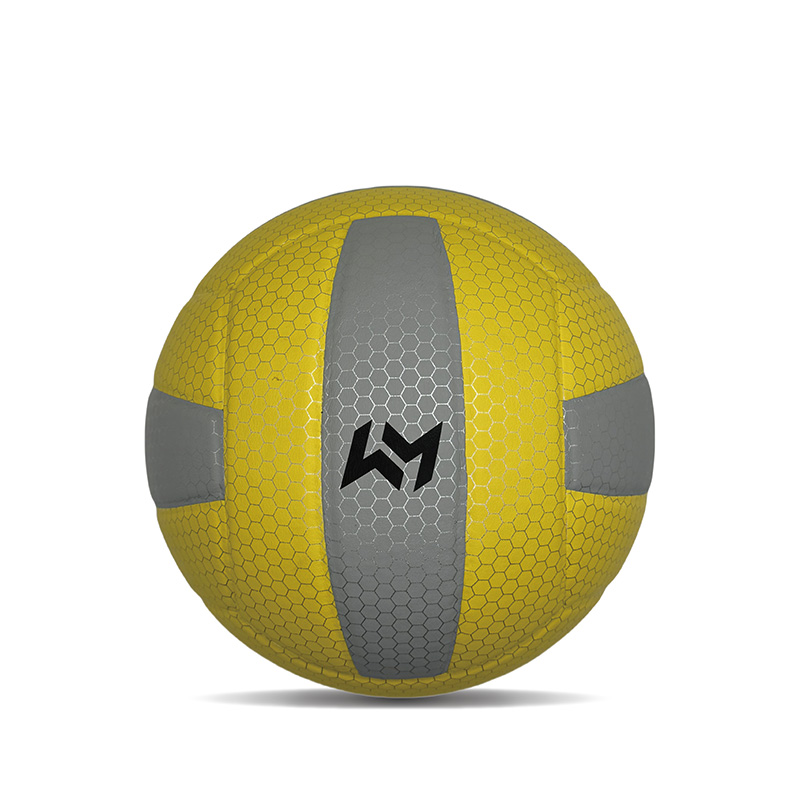 PU Material Honeycomb Pattern Thermal Bonded Professional Official Volleyball ballIntroducing the PU Material Honeycomb Pattern Fluorescent Thermal Bonded Volleyball – the epitome of performance, durability, and style. Engineered for both recreation...View Product →
Bladders
Air retention decides how often a ball needs topping up. Butyl bladders hold pressure far longer than latex and are the practical choice for training programs and wholesale orders, where balls sit between sessions. Latex delivers a livelier, softer feel but loses air steadily, which suits players who inflate before every session. Foamed butyl adds a layer of softness while keeping retention reasonable, a common specification on modern training balls.
How to Match a Ball to Your Use Case
Start with size. Size 5 is the standard for players aged roughly 13 and up and is used in all official beach competition; younger children do better with a size 4, which is lighter and easier to serve and set. Next, press the cover with your thumb. A proper beach ball gives noticeably — if it feels like an indoor ball, it is either overinflated for sand or simply built too firm. Confirm pressure with a gauge on arrival rather than trusting feel alone, and recheck when temperatures swing, because cold air lowers pressure and heat raises it.
soft premium PU leather size 5 training volleyball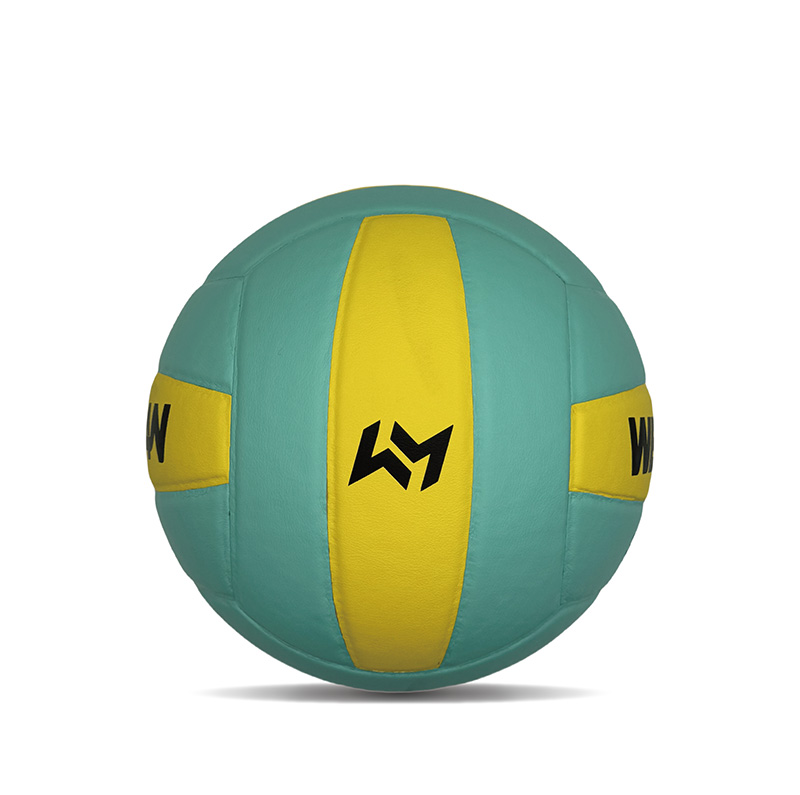 Durable Soft Touch Premium PU Leather Official Size 5 Volleyball Ball Original Training VoElevate your game with the Durable Soft Premium PU Leather Official Size 5 VolleyballView Product →
Then match construction to frequency of use. A once-a-week recreational group can save money with a machine-stitched PVC or entry-level PU ball; a club that trains four evenings a week should buy PU covers with butyl bladders and treat replacements as a routine budget line. Match-level buyers should also check weight and roundness tolerances, since those specifications separate a consistent ball from one that drifts on serves. For a deeper walk-through of cover materials, grip, and durability, this PU leather beach volleyball performance guide covers the buying checklist in detail.
What Clubs, Schools, and Wholesale Buyers Should Verify
For organizations outfitting teams or reselling, the feel of a single ball matters less than consistency across a batch. Before committing to a volume order, check the following on samples from the actual production run:
- Seam strength after repeated inflation cycles, since stitched balls tend to fail at the seams first
- Air retention, measured as pressure drop over 72 hours
- Weight and circumference consistency across a random batch sample, not just the approved sample
- Cover grip when wet, because school and recreation programs often play in morning dew or coastal humidity
- Packaging and marking options, from printed logos to gift-box presentation for club merchandise
Customization is where manufacturer-direct sourcing pays off. Logo printing, custom colorways, panel patterns, size runs, and packaging can usually be specified alongside the order, and a capable OEM/ODM service turns a standard ball into club merchandise or a sponsor-ready giveaway. Sampling first costs little and prevents the most expensive mistake in ball sourcing: a full order that shares one defect.
Care Habits That Stretch Ball Life
Two habits account for most of a beach ball's lifespan. First, rinse it. Salt crystals and sand grains grind into the cover every session, and a quick rinse in fresh water followed by a towel dry removes most of that abrasion. Second, manage pressure and heat. Check inflation before play, because a ball left in a hot car can climb well above specification; store it at moderate pressure out of direct sunlight, since UV exposure slowly hardens and dulls PU covers. Wipe bonded covers with a damp cloth rather than solvents, which dry out surface texture. A ball treated this way typically outlasts a neglected one several times over, and the difference compounds quickly for programs that own dozens of balls.
The short version: choose a size-5 beach ball with a soft PU or moisture-managing cover, confirm it holds 0.175–0.225 kg/cm², favor machine-stitched or thermal bonded seams for sand exposure, and test samples before any volume purchase. Players get a ball that is easier on their arms; programs get inventory that survives seasons instead of months. That combination — honest specifications, durable construction, and customization when the order justifies it — is what a ball manufacturer with two decades of production experience should put on the table.