


 English
 русский
 Español
 Deutsch
 عربى
 中文简体

Content
- The short answer: a size 4, with a size 3 fallback
- Soccer ball sizes by age, circumference and weight
- When a size 3 is the better ball for an 8-year-old
- Grass, futsal and low-bounce: three different size 4 balls
- How to check the ball you already own in four steps
- Beyond size: cover, stitching and pressure
- Frequently asked questions about soccer ball size for 8-year-olds
Walk into any sports shop with an 8-year-old and you will end up holding two balls that look almost identical, one slightly heavier in the hand. The difference is real. A size 3 measures 58 to 61 cm around and weighs 300 to 320 grams; a size 4 measures 63 to 66 cm and weighs 350 to 390 grams. That extra 4 cm and 60 grams is what decides whether a child strikes through the ball or drags it sideways across the grass.
Age charts help, but they are written for averages. The practical question is which ball matches this particular child, this season, in this league.
The short answer: a size 4, with a size 3 fallback
An 8-year-old should use a size 4 soccer ball: 63 to 66 cm in circumference and 350 to 390 grams at the start of play. It is the size used from under-9 through under-12 in most youth structures.
The age band exists for a physical reason. A size 3 at roughly 310 grams is light enough for a six-year-old to lift a shot. A size 4 at roughly 370 grams adds about 20 percent more mass, and an 8-year-old of 25 to 30 kg can still accelerate that weight with a properly struck instep pass. Move up to a size 5 at 410 to 450 grams and most 8-year-olds start scooping under the ball rather than driving through it, because the ball wins the collision with the leg.
Three numbers settle the purchase faster than any chart: circumference, weight, and the league rulebook. The first two are below; the third is usually a PDF nobody reads until the first match day.
Soccer ball sizes by age, circumference and weight
Size 4 sits in the middle of three youth sizes, and the diameter gap between a size 3 and a size 4 is smaller than most parents expect.
A size 4 soccer ball is a youth match ball measuring 63 to 66 cm in circumference and weighing 350 to 390 grams, specified for players aged roughly 8 to 12 and used for under-9 to under-12 competition.
| Size | Circumference | Weight | Typical age | Where it fits |
| Size 1 | Mini, no match standard | Varies by model | All ages | Skill work, freestyle, souvenirs |
| Size 3 | 58-61 cm | 300-320 g | Up to 8, under-8 and below | First seasons, small 8-year-olds, in-house leagues |
| Size 4 | 63-66 cm | 350-390 g | 8-12, under-9 to under-12 | The default for an 8-year-old |
| Size 5 | 68-70 cm | 410-450 g | 13 and up, under-13 and above | Adult and secondary school play |
Weight, not diameter, is the number that changes a young player's shooting mechanics. A size 4 is only about 4 cm larger around than a size 3, yet it carries roughly 60 grams more mass through the contact point of every pass and shot.
When a size 3 is the better ball for an 8-year-old
A size 3 is the better choice for an 8-year-old who is physically small for their age, is in a first or second season, or plays in a division that still mandates size 3 for the under-8 group.
- Read the division handbook first. Many recreational and in-house under-8 divisions keep size 3 for another year, and a printed league rule overrides any general age chart, including this one.
- Check height and weight. Under roughly 125 cm or 25 kg, the smaller ball sits closer to the child's natural striking point and produces cleaner contact during technical work.
- Look at the technique. A child still toe-poking the ball and losing balance on shots will rebuild a swing faster with a lighter ball than with an oversized one.
- Consider the playing surface. Small-sided games on hard courts or in tight spaces reward a size 3, because the ball is easier to keep within two touches.
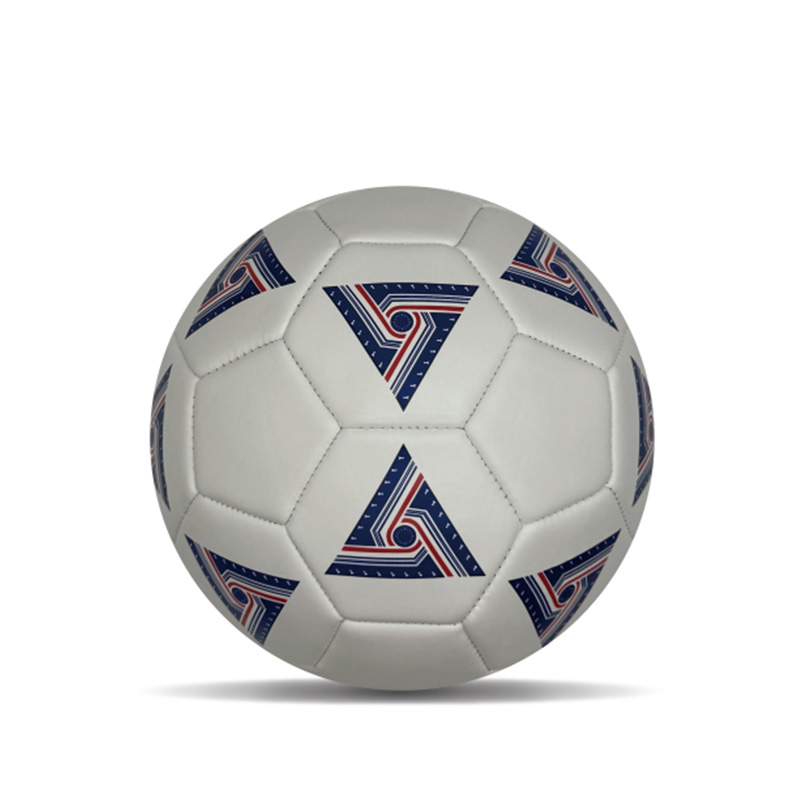 Size 3 Youth Training Soccer BallA machine-stitched PVC size 3 ball for young beginners, useful when age or league rules still require the smaller size.View Product →
If weight or league rules point to the smaller ball, our complete size 3 dimensions and age guide breaks the measurements down further. Treat a size 3 as a bridge, not a permanent home: most players move to a size 4 within a season, and some within a few months.
Grass, futsal and low-bounce: three different size 4 balls
A size 4 sold for grass is not the same ball as a size 4 sold for futsal, and the two should not be swapped for convenience.
Grass and turf size 4
63 to 66 cm, 350 to 390 g, standard rebound and a textured cover for grip on natural grass or artificial turf.
Futsal and court size 4
62 to 64 cm, 400 to 440 g, deliberately reduced bounce and a low-friction cover for hard indoor courts.
Both carry a size 4 label and both are sold to the same age group, which is where the confusion starts. A futsal ball is heavier and built to stay low, so an 8-year-old playing indoor futsal is on the correct ball, while the same ball taken outdoors for a grass session will feel flat and sluggish. Low-bounce variants follow the same logic for street and small-court games: they reduce the rebound so a child can control the ball in a confined area, and they should not double as match balls on a full pitch.
How to check the ball you already own in four steps
A soft tape measure and a kitchen scale settle the size question in under two minutes, which is faster than another shop visit.
- Measure around the widest point of the ball with the tape snug but not compressing the surface. Anything between 63 and 66 cm is a size 4.
- Weigh the ball on a kitchen scale. Below 340 grams it is more likely a size 3 or an underweight training ball, even if the box said otherwise.
- Check the pressure range printed near the valve. Youth size 4 balls commonly sit around 0.6 to 0.8 bar, and an under-inflated ball plays heavier and duller than its listed weight suggests.
- Press firmly with a thumb. A correctly inflated ball gives a few millimetres and springs back; one that bottoms out under light pressure needs air before it needs replacing.
Old balls drift out of spec quietly. A ball left half-flat in a garage over winter will read light on the scale and feel dead on the foot, which parents often misread as the child having outgrown the size.
Beyond size: cover, stitching and pressure
Once the size is correct, the cover material and the stitching decide whether the ball survives a full season of school or club use.
- PVC covers with machine stitching are the durable budget option, well suited to school sets, wet grass and shared club equipment.
- PU covers give a softer first touch and are worth the extra cost for a child in structured technical training.
- Thermal bonded constructions remove the exposed seams and handle water better, but they are usually more ball than an 8-year-old needs.
- Butyl bladders hold pressure for weeks; latex bladders feel livelier but need topping up more often.
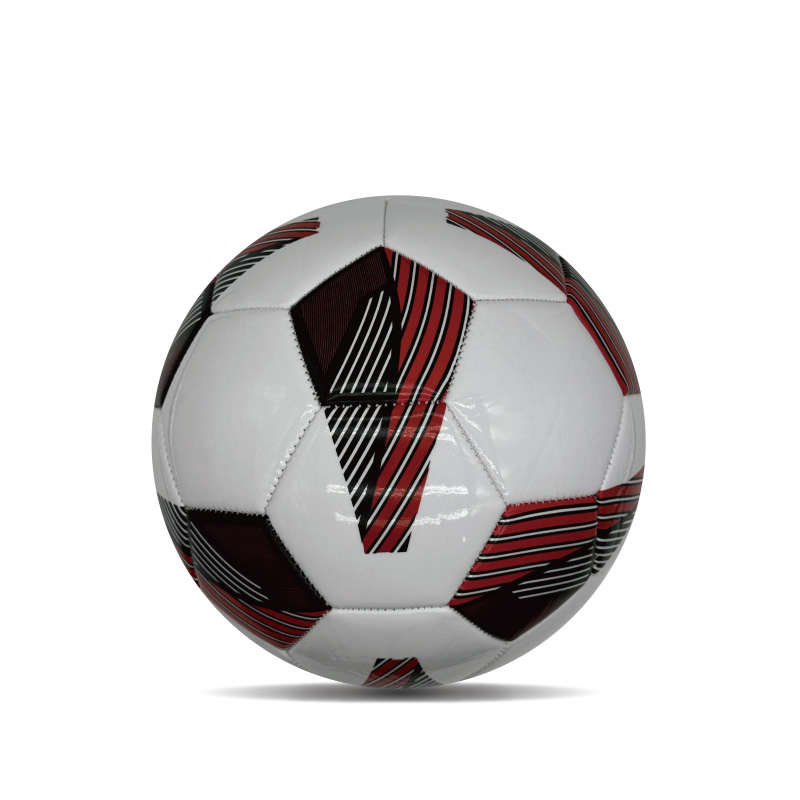 Durable Size 4 PVC Training Soccer BallA machine-stitched size 4 PVC ball for frequent school or club practice, with reinforced stitching to handle weekly training.View Product →
For a child splitting time between club training and a school set, the gap between a training ball and a match ball comes down to cover thickness and panel construction rather than size, so buy the tougher ball for weekly use and keep one match-quality ball for game day.
Frequently asked questions about soccer ball size for 8-year-olds
Is a size 4 ball too big for an 8-year-old?
Usually not. Size 4 covers ages 8 to 12 and matches the leg strength of most 8-year-olds. If the child is small for their age or in a first season, a size 3 for a few months is a sensible bridge, since a ball that can be struck cleanly teaches better technique than one that cannot.
What size ball do under-9 leagues use?
Most under-9 divisions play a size 4, while under-8 and below commonly stay on a size 3. League rules take priority over general age charts, so check the division handbook before buying.
Can an 8-year-old play with a size 5 ball?
They can kick it, but they cannot control it well. A size 5 at 410 to 450 grams is roughly 20 percent heavier than a size 4 and harder underfoot, which pushes young players into toe-poking and off-balance strikes. Keep size 5 for ages 13 and up.
How firm should a size 4 ball be?
Firm enough to rebound cleanly, with visible give under firm thumb pressure. Follow the range printed near the valve, commonly 0.6 to 0.8 bar on youth size 4 balls, and recheck every few weeks because unused balls lose pressure steadily.