


 English
 русский
 Español
 Deutsch
 عربى
عربى 中文简体
中文简体
Content
In the design logic of soccer equipment, the number of panels is one of the core elements determining the on-field experience. From the classic 32-panel construction to the transitional 20-panel style, and then to the modern minimalist 12-panel design, soccer balls with different panel counts differ significantly in manufacturing processes, performance, and applicable scenarios. This article will break down the “design language” of these three panel types to help you accurately pick the Training Soccer Balls that best suits your needs.
1. Manufacturing Process: The Evolution from “Multi-Piece Construction” to “Few-Piece Integration”
The number of panels directly determines the splicing logic and manufacturing complexity of the soccer ball, and is the core indicator distinguishing different panel types.
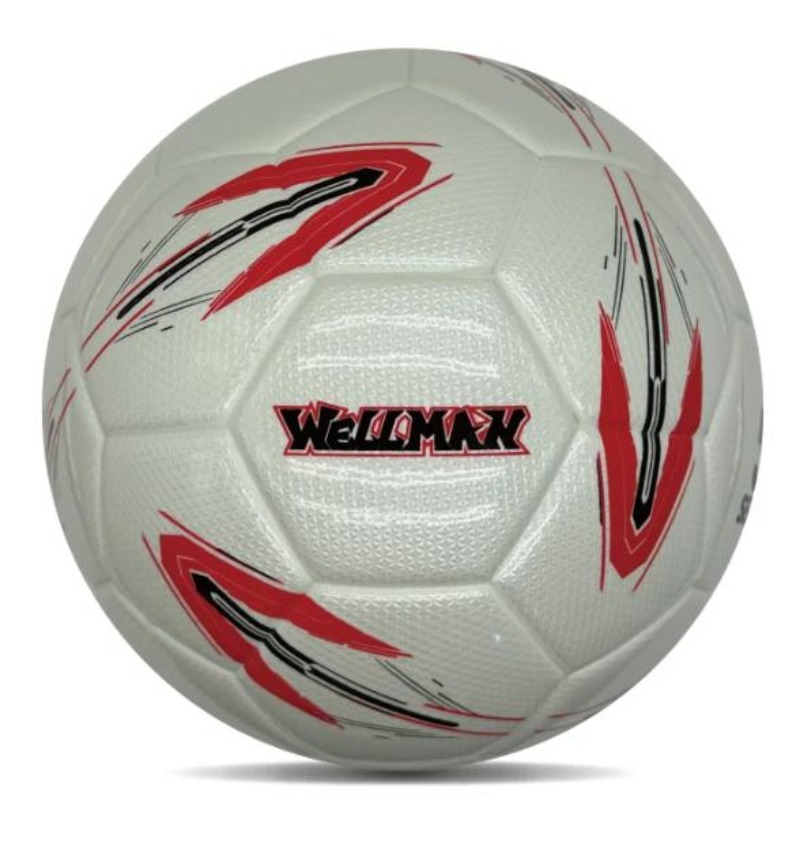
● 32-Piece Design: The “Classic Template” of Traditional Footballs
The 32-piece design is the most classic design for footballs (composed of 12 pentagonal pieces + 20 hexagonal pieces). The mainstream manufacturing process is machine sewing, with the core steps including:
-
Piece Stamping: Stamping PU, PVC, or other fabrics into 12 pentagonal + 20 hexagonal standard pieces;
-
Stitching: Sewing each piece individually using a double-stitched overlock technique, with stitch depth approximately 1.5-2mm to ensure the pieces are secure;
-
Bladder Filling: After inserting a butyl rubber bladder, inflating it and performing an airtightness test.
The characteristic of this process is that the football surface has clear stitching lines with evenly raised stitches (some styles apply waterproof adhesive to the stitches). However, due to the large number of pieces and seams, the stitching wear will increase with repeated use.
● 20-Piece Set: A Transitional Choice for Beginners to Advanced Users
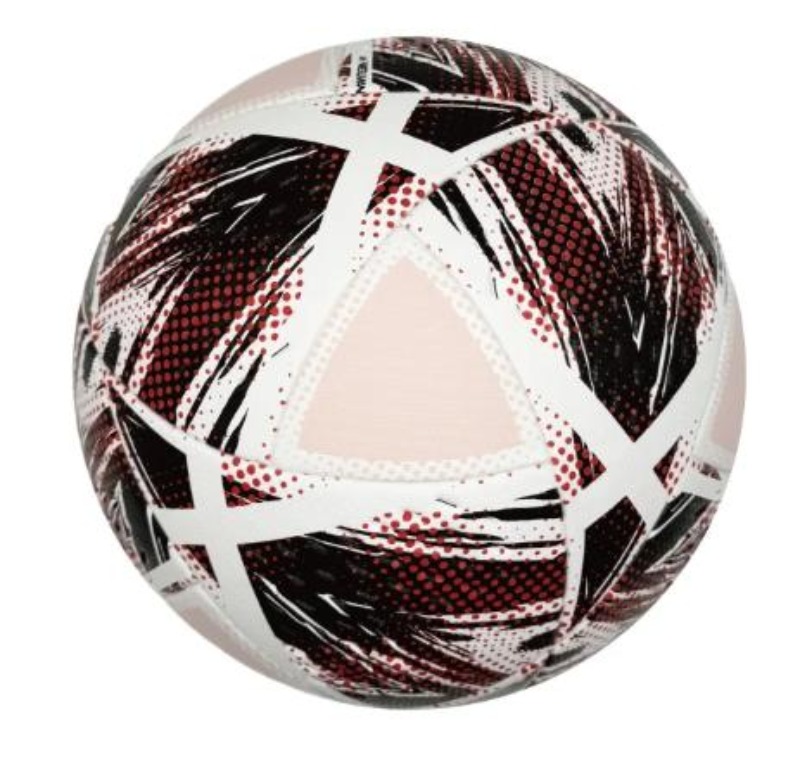
The 20-piece set is a transitional model between traditional and modern styles (commonly consisting of 12 pentagonal pieces + 8 hexagonal pieces). The manufacturing process combines machine sewing and semi-heat bonding, with optimized workflow:
-
Large Piece Stamping: The pieces are larger than the 32-piece set, reducing the number of seams;
-
Hybrid Seaming Techniques: The main pieces are reinforced with machine sewing, and edge areas are partially heat-bonded;
-
Surface Protection: An abrasion-resistant coating is added to reduce the risk of seam wear.
This set has approximately 40% fewer seams than the 32-piece set, resulting in improved surface smoothness, making it a “middle option” balancing experience and cost.
● 12-Piece Design: The “Minimalist High-End” of Modern Football
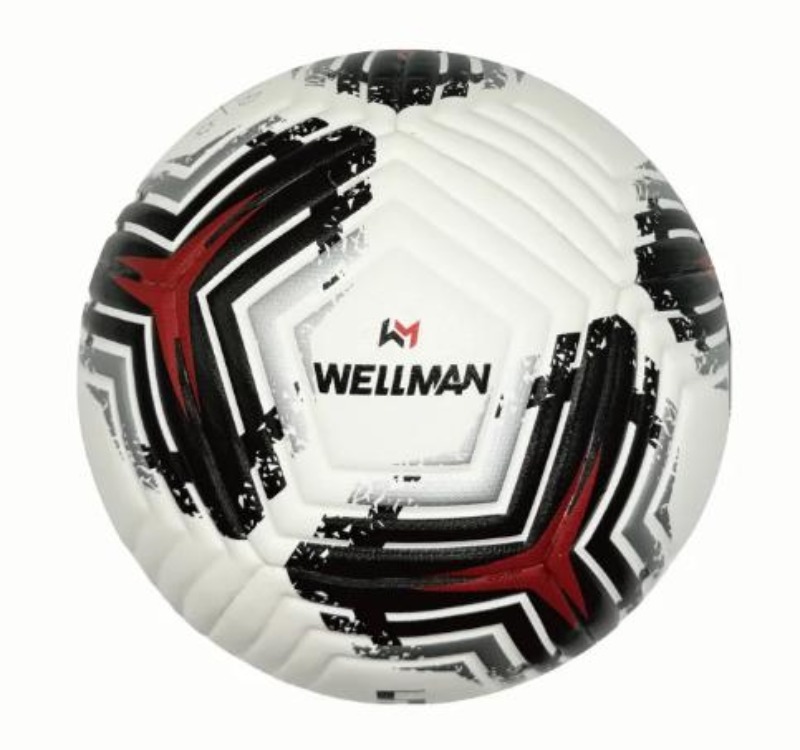
The 12-piece design is currently the mainstream design for high-end footballs (large, irregularly shaped panels, without fixed pentagonal/hexagonal limitations). The core technology is heat bonding/seamless lamination:
-
Large Panel Pre-treatment: The fabric is stamped into 12 large panels, and hot melt adhesive is applied to the edges;
-
High-Temperature Heat Melting Lamination: The panels are placed in a custom mold, and under 120-150℃ high temperature and specific pressure, the edges of the panels are heat-melted to form a seamless structure;
-
Precision Finishing: After implanting a high-elasticity inner bladder, roundness calibration (error ≤ 0.5mm) + surface abrasion-resistant coating treatment.
This panel design features a smooth, seamless surface and an integrated structure, completely eliminating the risk of gaps and airtightness, making it a commonly used style in professional football.
2. Performance: Fewer panels, a smoother experience?
The difference in the number of panels directly translates into differences in on-court performance, primarily in three dimensions:
1. Flight Stability
-
32-panel design: Multiple panels and seams result in uneven wind resistance, causing slight fluctuations in the high-speed flight trajectory;
-
20-panel design: Fewer panels result in more even wind resistance, improving stability by approximately 20% compared to the 32-panel design;
-
12-panel design: The seamless structure ensures even wind resistance distribution, achieving professional-level flight trajectory accuracy.
2. Touch Experience
-
32-panel design: Prominent seam protrusions create a “grainy” feel upon contact with the ball, resulting in fragmented ball control feedback;
-
20-panel design: Fewer seams create a more continuous contact area, providing a smoother feel than the 32-panel design;
-
12-panel design: Seamless surface and uniform material provide a consistent and delicate touch upon contact with the ball, resulting in precise ball control feedback.
3. Durability
-
32-piece type: Areas with many seams are prone to wear and tear; long-term use may lead to glue separation and air leakage.
-
20-piece type: Fewer seams + localized heat bonding; durability is approximately 30% higher than the 32-piece type.
-
12-piece type: Seamless structure with no wear points; durability is more than twice that of the 32-piece type.
3. Applicable Scenarios & Purchase Recommendations: Matching to your needs is the optimal solution.
Different types of soccer balls correspond to different usage scenarios and user groups:
-
32-piece type: Suitable for beginners and basic daily training; high cost-performance ratio.
-
20-piece type: Suitable for intermediate players and amateur team training/matches; balances experience and cost.
-
12-piece type: Suitable for professional players and high-end training/official matches; pursues ultimate performance.