


 English
 русский
 Español
 Deutsch
 عربى
عربى 中文简体
中文简体
Content
- What Football Size Actually Measures
- The Football Size Chart: Sizes 1 to 5
- Matching Football Size to Age and Level
- Football vs American Football: Two Different Scales
- Match Ball, Training Ball and Futsal: Same Size, Different Ball
- Why Two Size 5 Balls Feel Different
- A Buyer's Checklist Before the Order Ships
- Frequently Asked Questions
A ball measuring 66 cm around its widest point is a size 4. Inflate the same shell two pumps further and it reads 69 cm, which is a size 5. Those three centimetres decide which age group can use the ball, which competition accepts it, and whether a container of five thousand balls passes inspection against the specification it was ordered to.
Football sizes are measurements with tolerances attached, not marketing labels. This guide covers the circumference and weight bands for sizes 1 to 5, how each one maps to age and level of play, where association football and American football part ways, and what buyers should check before a bulk order ships.
What Football Size Actually Measures
Football size is defined by circumference, measured around the widest point of a fully inflated ball.
The official bands are tight, and every one of them is a range. A size 5 ball measures 68-70 cm and weighs 410-450 g at kick-off, a size 4 sits at 63.5-66 cm and 350-390 g, and a size 3 runs 58-60 cm and 300-320 g. Those spreads exist because PU and PVC panels stretch, because stitching tension varies between operators, and because a ball measured straight off the pump is not the same ball measured the next morning.
Measure the same way every time: inflate to rated pressure, let the ball rest at room temperature, then run a tape around the widest point. A soft ball can read 1-2 cm under its true size, which is how a correctly labelled size 5 fails incoming inspection.
Weight is the number players feel first. A size 5 match ball carries roughly 40 percent more mass than a size 3, which changes how a young player strikes and controls the ball long before it changes the scoreboard.
The Football Size Chart: Sizes 1 to 5
Treat the chart below as the baseline for a specification sheet, and read every number as a tolerance band rather than a target.
| Size | Circumference | Weight | Typical age | Main use |
| Size 1 | Roughly 18-20 cm across | Not regulated | 3-5 | Juggling, gifts, indoor skills |
| Size 2 | Around 45-47 cm | Not regulated | 4-6 | First touches, school PE |
| Size 3 | 58-60 cm | 300-320 g | 6-8 | Small-sided games, junior training |
| Size 4 | 63.5-66 cm | 350-390 g | 8-12 | Youth league, futsal, training |
| Size 5 | 68-70 cm | 410-450 g | 13 and up | Adult match and senior training |
Pressure belongs on the same sheet. Sizes 3 to 5 are normally filled to 0.6-1.1 bar (8.5-15.6 psi). Over-inflation pushes the circumference above the band and makes the ball harder to control; under-inflation drops it below the band, so the ball fails a size check even when the label on the carton is correct.
Matching Football Size to Age and Level
Match the ball to the player's age band first and to the competition second, because a ball that is one size too heavy slows technique instead of building it.
Size 3: the under-8 ball
At 58-60 cm and 300-320 g, a size 3 is light enough for a six to eight year old to strike cleanly and get the ball off the ground. It is the standard shell for small-sided games, school PE and first club sessions, usually in PVC or soft PU.
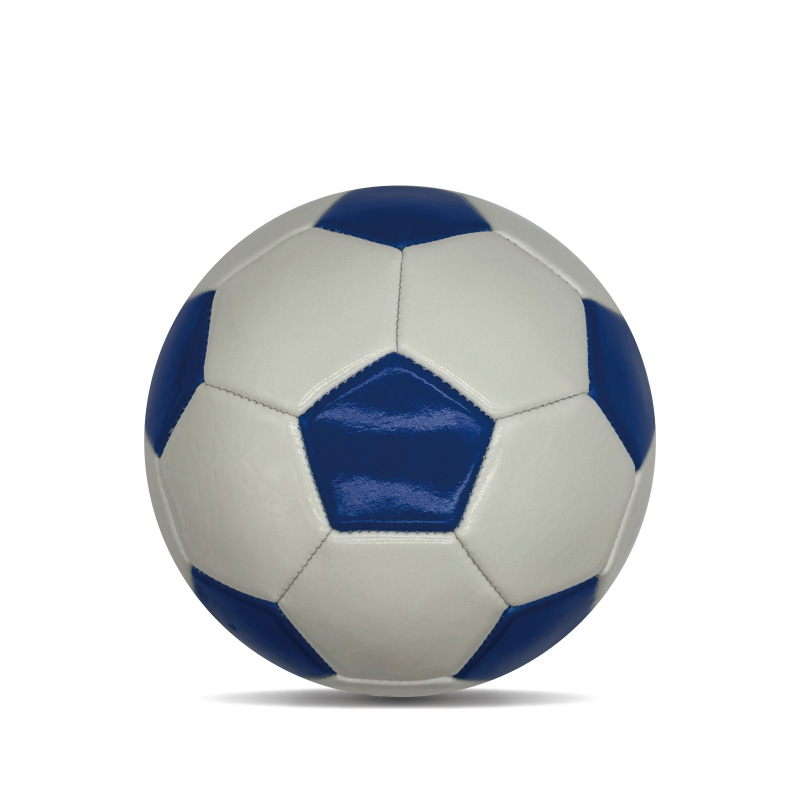 Machine-Stitched Eco-Friendly PVC Size 3 Kids Soccer BallA size 3 ball for small-sided games, school PE, and first club sessions, with PVC surface and reinforced machine stitching.View Product →
Size 4: the youth standard
At 63.5-66 cm and 350-390 g, size 4 covers most youth leagues from eight to twelve. It is also the shell used for futsal, where the same circumference carries a heavier weight and a lower bounce, so check competition rules rather than the size number alone.
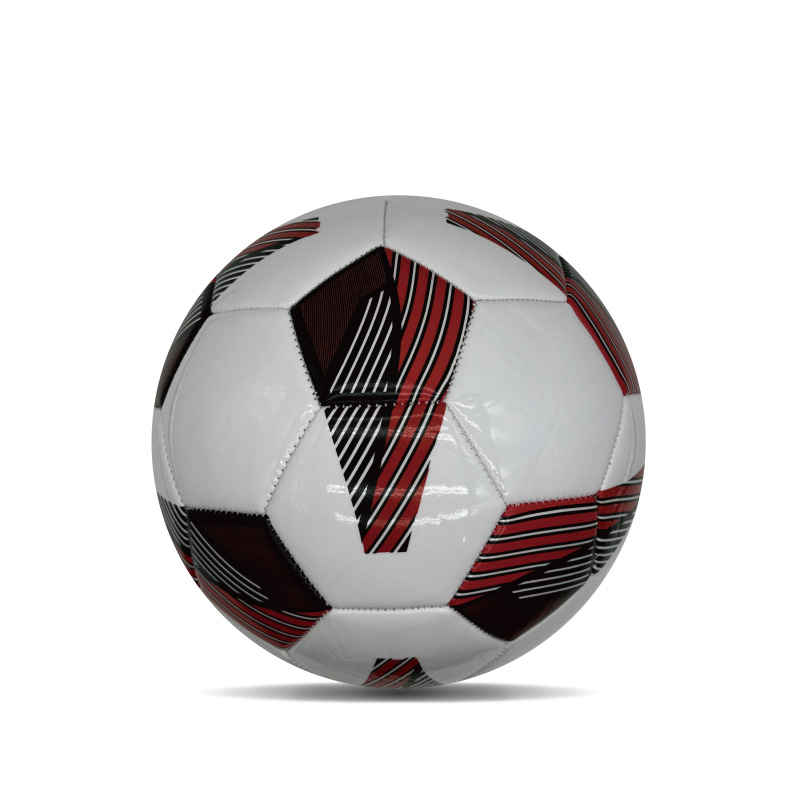 Durable PVC Size 4 Youth Training Soccer Ball for Kids and AdultsA size 4 training ball for youth leagues, school practices, and casual scrimmages, with PVC cover and machine-stitched panels.View Product →
Size 5: thirteen and up
At 68-70 cm and 410-450 g, size 5 is the adult match ball and the senior training ball. When an older junior group moves up to it, the change is felt in weight and pressure far more than in circumference.
Three signs that a size mismatch is already affecting training:
- Players stop trying to control the ball and start hitting it.
- Passing drills stay on the ground because lifting the ball costs too much effort.
- Long passes fall short even when the technique looks correct.
Football vs American Football: Two Different Scales
Association football is sized by circumference while American football is sized by length, so the two scales never convert into one another.
A regulation American football used in the professional game is about 11 to 11.25 inches (28 to 28.6 cm) long and weighs roughly 400 to 430 g, close to a size 5 soccer ball in mass but nothing like it in shape. Youth versions step down in length and are sold by age band rather than by a numbered circumference class. If you came here for a flag football or school gridiron programme, the chart you need is a length chart.
Match Ball, Training Ball and Futsal: Same Size, Different Ball
Two balls can both be printed size 5 and still behave completely differently, because size describes the shell while construction describes the ball.
Training balls keep the size and change the build: heavier shells for abrasive outdoor courts, thicker PVC for school use, softer PU covers for younger players. Match balls move the other way, trading some durability for flight consistency, a tighter weight tolerance and a surface that grips in the rain.
Futsal is where the label size 4 stops meaning youth. A futsal size 4 measures 62-64 cm, weighs 400-440 g and is filled to a lower pressure so it rebounds only 30-50 cm from a two metre drop, which keeps the ball on the floor and under a player's foot.
Adult competition balls usually pair a thermal bonded PU shell with a butyl or butyl-foam bladder, so the ball holds its pressure between matches instead of needing a top-up before every session.
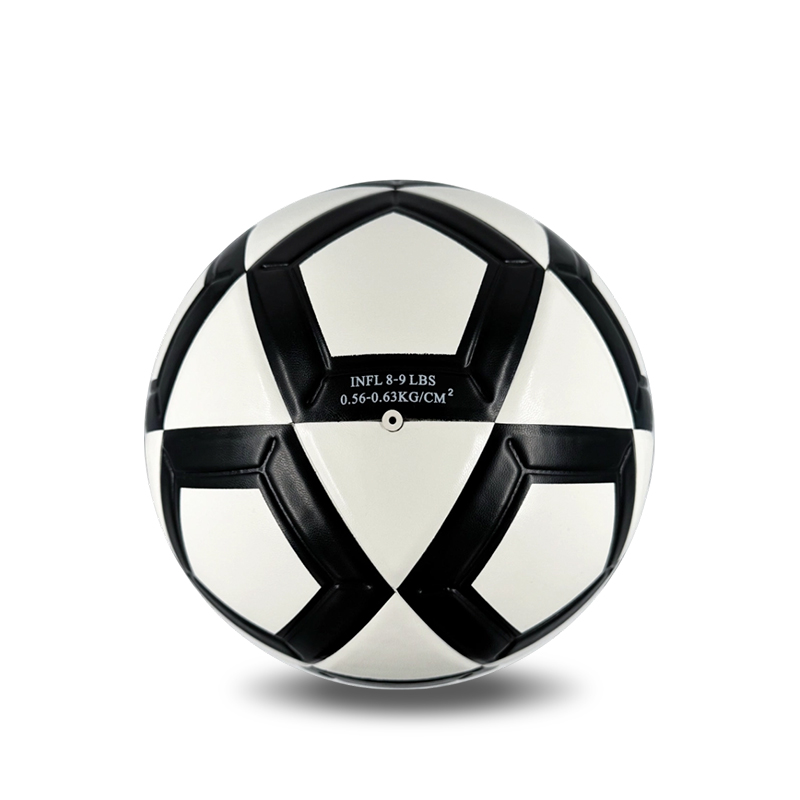 Custom Logo Thermal Bonded Size 5 Match Soccer BallAn adult size 5 competition ball with thermal bonded PU construction, intended for club matches, team training, and wholesale customization.View Product →
Why Two Size 5 Balls Feel Different
Panel construction and bladder choice decide how long a ball holds its size, its shape and its grip, even when both samples leave the factory inside the 68-70 cm band.
Machine-stitched
- Lower unit cost, offered in sizes 2 to 5
- Visible seams and hand-fed panels
- Takes on more water in wet weather and gains weight
- Softer feel that breaks in quickly
- Best for school, club and training volumes
Thermal bonded
- Higher unit cost, mostly built in sizes 4 and 5
- Bonded panels with minimal external stitching
- Low water uptake, so the weight stays stable
- Firm, consistent surface and truer flight
- Best for match and competition use
Panel count is the next variable. A 32-panel ball spreads stress differently from a 12-panel or 20-panel build, which affects roundness and how the ball behaves after a season of use, and the piece count code of soccer balls explains how those numbers are assigned.
Bladders matter just as much. Latex gives a softer touch but loses air quickly, butyl holds pressure for weeks and feels firmer, and synthetic rubber sits between the two.
A Buyer's Checklist Before the Order Ships
Size disputes are almost always measurement disputes, and they are settled with a tape, a scale and a pressure gauge rather than with the label on the carton.
- Measure the circumference of ten balls per batch at the widest point, after they have rested at room temperature.
- Weigh the same ten balls and compare each one against the weight band for that size, not against the batch average.
- Check inflation pressure with a gauge and note whether the factory fills to the middle of the range or to the top of it.
- Put size, panel count, bladder type and cover material in writing on the specification sheet before production, so the sample and the container are built to the same numbers.
For mixed orders, ask the supplier to hold one size band across every SKU, so a school order arrives with the sizes that were ordered and nothing else.
When the size you need is not in a catalogue, a 62 cm low-bounce futsal ball or a 300 g size 3 with a club crest for example, OEM/ODM customization starts from the specification sheet and works back through material, panel count and bladder.
Frequently Asked Questions
What football size should I buy for a 10-year-old?
Size 4 in most cases: 63.5-66 cm and 350-390 g, the standard band for ages 8 to 12. Check the league rules first, because some youth competitions move to size 5 at under-11 or under-12.
Is every size 5 ball 68-70 cm?
No. That band applies only to a ball inflated to its rated pressure and measured at the widest point. Under-inflated balls read smaller, and low-cost PVC shells can drift outside the band as the material stretches.
Do football sizes apply to futsal and indoor balls?
Only in name. Futsal uses a size 4 with a smaller circumference of 62-64 cm, a heavier weight of 400-440 g and lower pressure so it bounces 30-50 cm from a two metre drop.
How much size variation is normal in a bulk order?
For machine-stitched PVC, a 3-4 percent spread across a batch is normal, while thermal bonded balls hold tighter. Sample ten balls per carton and reject only when the batch falls outside the regulated band.