

 English
 русский
 Español
 Deutsch
 عربى
 中文简体

Content
Youth basketball sizing
Walk into any gym on the first Saturday of a rec season and the same picture repeats: a six-year-old holding a ball that reaches from hip to ribs, pushing it toward a ten-foot rim with both hands.
The ball is almost always a Size 7, borrowed from an older sibling or handed over by a coach working through a full rack. It is the most common equipment mistake in youth basketball, and the easiest one to fix.
The short answer: a six-year-old needs a Size 3 basketball
A six-year-old should play with a Size 3 basketball, measuring 22.5 inches (57 cm) in circumference and weighing roughly 10 ounces (280 to 300 g).
Weight explains most of the difference. A regulation Size 7 ball weighs 600 to 620 g, which for a 20 kg six-year-old is close to three percent of their own body weight. A Size 3 at around 290 g is under one and a half percent. That gap decides whether a child can release the ball with one hand or has to heave it from the chest.
Two details are worth checking before you buy. Some leagues start six-year-olds on Size 4, so confirm the division rule first. And toys sold as "mini" or "kids" balls are often Size 1 or Size 2, which a six-year-old outgrows within a season.
Size 3 or Size 4: how to decide for your child
Start with Size 3. Move up to Size 4, at 25.5 inches and about 14 ounces, only when the child is unusually tall or strong for six, or when the league rulebook requires it.
Stay with Size 3 if
- The child is six and in their first or second season.
- Shots from 1.5 to 2 meters still fall short or change shape with a bigger ball.
- The division plays with a smaller youth ball.
Move to Size 4 if
- The child is tall for six and already shoots one-handed with a Size 3.
- The rulebook names Size 4 for under-eight or under-nine play.
- Sessions mix six- and eight-year-olds in one group.
| Size | Circumference | Weight | Typical age | Where it is used |
| Size 3 | 22.5 in / 57 cm | 280-300 g | 4 to 8 | First ball, under-six and under-eight recreation |
| Size 4 | 25.5 in / 65 cm | About 400 g | 7 to 9 | Under-eight and under-ten youth leagues |
| Size 5 | 27.5 in / 70 cm | About 480 g | 9 to 11 | Standard youth game ball |
| Size 6 | 28.5 in / 72 cm | 540-570 g | 11 and up | Girls and women's league play |
| Size 7 | 29.5 in / 75 cm | 600-620 g | 13 and up | Adult men's play |
If your child sits right at the boundary, this breakdown of Size 4 specifications, weight tolerance, and age range is the natural next read.
Three checks that confirm the ball actually fits
A correctly sized ball lets a six-year-old shoot one-handed from shoulder height without changing their stance or dropping their elbow.
-
The one-hand release
Ask the child to shoot from 1.5 to 2 meters. If the ball drops to chest height before release, or both hands stay on it through the push, it is too heavy for now.
-
The dribble return
A relaxed push should bring the ball back to roughly waist height. A ball that needs a slap to come back is over-inflated or too big for the hand doing the work.
-
The pressure check
Most youth balls are specified between 7 and 9 PSI. Check every few weeks, because a soft ball feels heavier and teaches a child to push rather than shoot.
If a six-year-old has to rebuild their shot to move the ball, the ball is the problem, not the player.
Rim height belongs in the same conversation. Eight feet is the usual recommendation for ages six to eight, and a Size 3 ball shot at a ten-foot hoop turns every attempt into a heave regardless of fit.
What to look for on the box
Buy a ball marked Size 3 in numbers, not simply "mini" or "kids", and match the cover material to the surface it will be used on.
Rubber
Cheapest and toughest. Best for driveways and asphalt, with a firm grip that feels unforgiving on a gym floor.
Composite PU
Softer touch and better grip for small hands. Works on gym floors and clean outdoor courts, wears faster on rough concrete.
Foam
Light and quiet. A sensible choice for hallway practice and shared apartments, though not built for outdoor use.
For indoor practice in a small space, a noise-free foam ball solves the complaint from the floor below without changing the size the child is learning on.
 Noise-Free Foam Indoor Basketball for KidsA lightweight 37 cm PU foam ball for quiet indoor dribbling, offering high rebound and custom patterns for young beginners in small spaces.View Product →
Buying for a team, school, or club
Order Size 3 as the base stock for any under-eight program, then add a small top-up batch of Size 4 for the taller and older players in the same group.
- Weigh a sample from each carton. A 20 to 30 g spread across a batch is normal, but a 320 g ball plays noticeably heavier for a small child.
- Buy a pressure gauge and check before each session. Consistent inflation affects feel more than the brand printed on the ball.
- Standardize the cover across the group, so no child ends up with a different grip every week.
- Ask about customization early. Printed sizes, club colors, and logo placement are worth requesting once an order passes a few dozen pieces.
 Size 4 Moisture-Absorbing PU Basketball for KidsAn official 25.5-inch size-4 ball with moisture-absorbing PU leather and a carrying bag, suited for young beginners stepping up from smaller sizes.View Product →
The step-up ball matters as much as the first one, so keep a size-4 option ready for players who outgrow the smallest size mid-season.
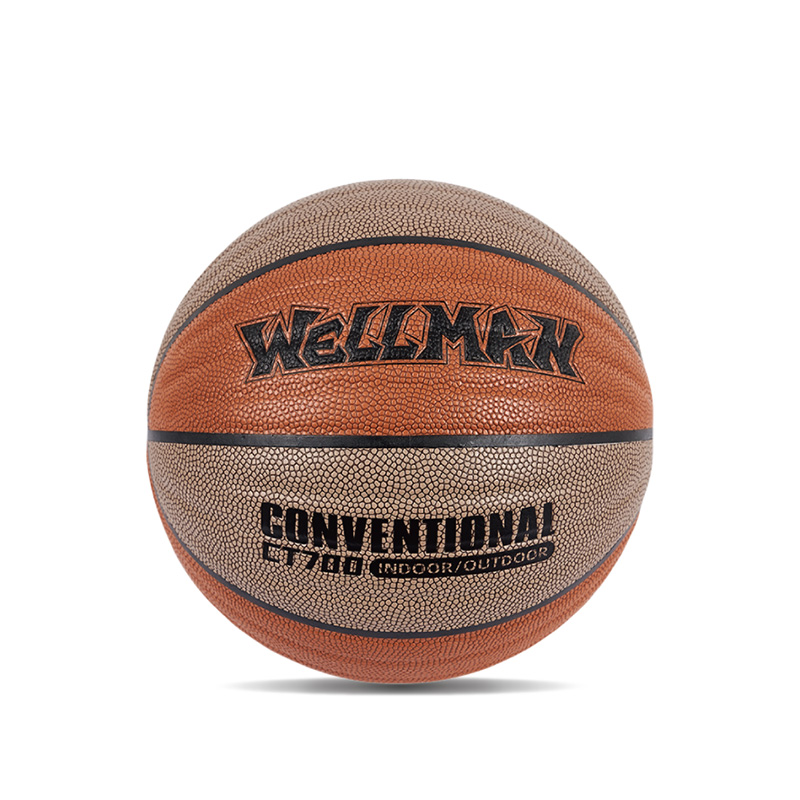 Custom Logo Color-Block Basketball for Children’s TeamsA 1.6PU leather team ball with butyl foam bladder and logo customization, aimed at school clubs and consistent team colors for young players.View Product →
Club and school orders usually need logos and consistent colors, which is where an OEM and ODM customization service saves a second purchase later in the year.
Frequently asked questions
Is a Size 4 ball too big for a six-year-old?
Usually yes, but not always. A Size 4 is about 25.5 inches around and 400 g, roughly a third heavier than a Size 3. A tall, strong six-year-old in an under-eight league that specifies Size 4 can handle it; a smaller beginner will do better with Size 3 for another season.
Can a six-year-old use a Size 5 ball?
Only as a novelty. At 27.5 inches and about 480 g, a Size 5 is the standard youth game ball for ages nine to eleven and pushes most six-year-olds back into a two-handed chest throw.
What rim height should a six-year-old shoot at?
Eight feet is the common recommendation for ages six to eight, with adjustable hoops dropping to around 6.5 to 7 feet for younger beginners. Ball size and rim height solve different halves of the same problem.
Does the material matter at this age?
Less than size and weight, but grip still counts. Composite PU gives small hands more control than hard rubber, while foam is the practical option for indoor practice at home.
The right ball is the one a child can shoot, pass, and dribble with without changing their natural motion. For most six-year-olds that means a Size 3 at 22.5 inches and about 10 ounces, checked against the league rulebook and re-checked at the pressure gauge once a month.