


 English
 русский
 Español
 Deutsch
 عربى
عربى 中文简体
中文简体
Content
- What Machine Stitched Construction Actually Means
- Machine Stitched vs. Thermal Bonded vs. Hand Stitched
- Durability: What Makes a Machine Stitched Ball Last
- PVC vs. PU Covers on Machine Stitched Balls
- Sizes, Standards, and Age Group Selection
- Quality Control Points When Sourcing from a Factory
- Customization and OEM Programs
- The Right Time to Choose Machine Stitched
When a procurement manager opens a quotation sheet and finds "machine stitched PVC soccer ball, size 5, custom logo," the term looks self-explanatory. Then the samples arrive. One ball has tight, even seams; another shows slight gaps at the panel corners; a third feels heavier than the spec sheet claims. Machine stitched soccer balls are not a single product category. They are a range defined by thread quality, stitch density, cover material, and the quality control a factory actually applies.
What Machine Stitched Construction Actually Means
Machine stitched soccer balls are assembled by automated sewing machines that lock cover panels together with reinforced polyester thread. The main advantage over hand stitching is consistency: a machine applies nearly identical tension on every stitch, so each ball in a production batch behaves like the next. The main difference from thermal bonded construction is that the seams are physical and can be inspected, touched, and measured. That makes quality verification simpler for buyers who need to check a shipment before accepting it.
Machine Stitched vs. Thermal Bonded vs. Hand Stitched
The choice of construction method affects cost, feel, durability, and the surfaces a ball can handle. The comparison below summarizes the key differences.
| Factor | Hand Stitched | Machine Stitched | Thermal Bonded |
|---|---|---|---|
| Production consistency | Moderate; depends on craftsman skill | High; automated tension control | Very high; precision molding |
| Unit cost | Highest | Moderate | Higher for premium materials |
| Seam durability | Strong if well-made | Strong and predictable | Seamless surface, less panel-edge wear |
| Feel and touch | Soft, traditional | Firm, dependable | Soft, responsive |
| Water resistance | Depends on thread and coating | Good with coated covers | Excellent |
| Best suited for | Match play, traditionalists | Training, schools, outdoor use | Match play, wet conditions |
The practical takeaway for volume buyers is clear. Machine stitched balls sit in the middle: they do not imitate a premium match ball, but they perform consistently on grass, artificial turf, and hard courts, and they keep the unit price low enough for school and club budgets. For a season of two practices per week, a well-made machine stitched ball rarely needs replacement, while a hand-stitched ball may lose its shape and a budget thermal bonded ball can delaminate at the edge.
Durability: What Makes a Machine Stitched Ball Last
Durability is not automatic. A machine stitched ball can fail early if the thread is weak, the stitch count is too low, or the cover breaks down under UV exposure. The most dependable machine stitched balls combine a reinforced polyester thread, a butyl bladder, and a textured PVC or PU cover.
Buyers should ask suppliers for three specific details:
- Stitch count per panel edge and thread type.
- Bladder material; butyl rubber is the standard for long air retention.
- Cover thickness and whether the surface finish provides grip.
A common mistake is judging durability by weight alone. A heavier ball often means a thicker cover or bladder, which changes the bounce and feel. To compare honestly, fold a sample slightly and check whether the seams open or hold, then repeat the test with samples from other suppliers.
PVC vs. PU Covers on Machine Stitched Balls
Most machine stitched soccer balls use PVC because it is tough, cost-effective, and holds its shape on rough surfaces. A machine stitched PVC training soccer ball is the standard choice for school programs and outdoor sessions because PVC stands up to scuffing on concrete and artificial turf without losing air pressure.
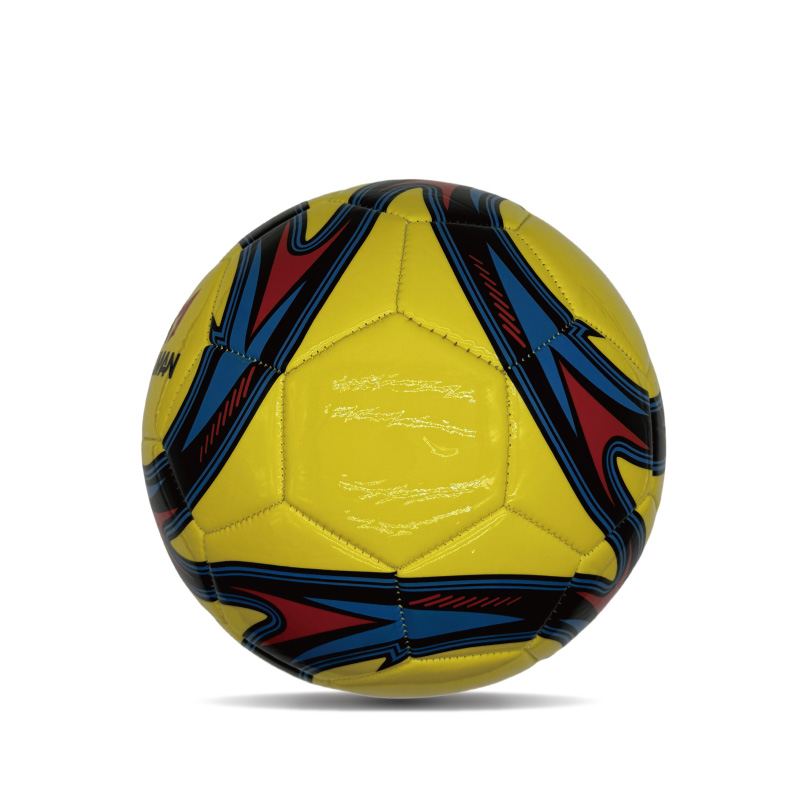 Wholesale PVC Leather Machine Stitched Indoor Game Training Practice Soccer BallChina PVC Leather Machine Stitched Indoor Game Training Practice Soccer Ball Manufacturer Supply Manufacturers and Factory, Meidong Sport...View Product →
PU covers appear on higher-end machine stitched balls. PU is softer and offers better touch, but it costs more and can peel if the base material is low quality. For buyers managing a budget, PVC is the practical default. For teams that want a softer touch without moving to thermal bonded construction, a PU machine stitched ball is a sensible middle step.
Environmental requirements are also part of the conversation. Some markets now ask for non-toxic PVC or phthalate-free materials, especially for children's products. Factories that offer these grades demonstrate a higher level of material control, which is a useful signal when comparing quotations from multiple suppliers.
Sizes, Standards, and Age Group Selection
Soccer ball sizes are standardized: size 3 for players under eight, size 4 for ages eight to twelve, and size 5 for ages thirteen and above. Machine stitched balls are available in all three, which makes them a convenient option for clubs that need one supplier for multiple age groups. A size 5 ball should measure 68 to 70 cm in circumference and weigh 410 to 450 g; a size 4 ball measures 63.5 to 66 cm. These ranges apply across all construction methods, so they are a useful baseline when comparing machine stitched balls from different factories.
A durable size 4 youth machine stitched soccer ball is often the first ball a young player owns. It has to be light enough for smaller feet, strong enough to survive the playground, and soft enough not to hurt when a child controls it. For the youngest players, a non-toxic size 3 kids soccer ball removes concerns about mouth contact, and the non-toxic PVC cover makes it suitable for indoor lessons as well.
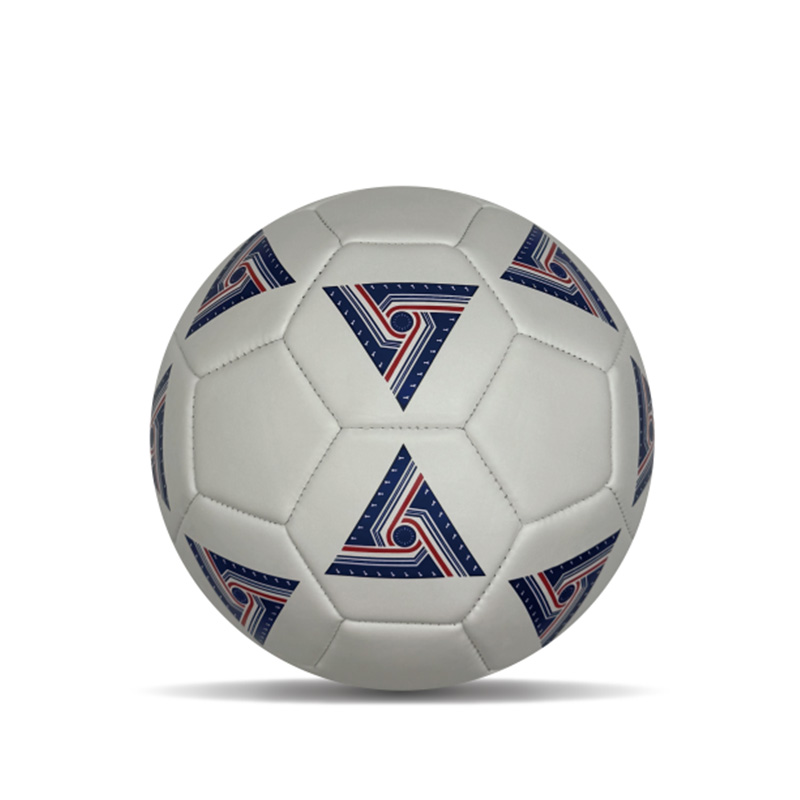 Wholesale Non-toxic PVC leather Training Football Soccer Ball Size 3 for Youth, China Non-toxic PVC leather Training Football Soccer Ball Size 3 for Youth, Kids, Adult Manufacturers and Factory, Meidong Sports offer W...View Product →
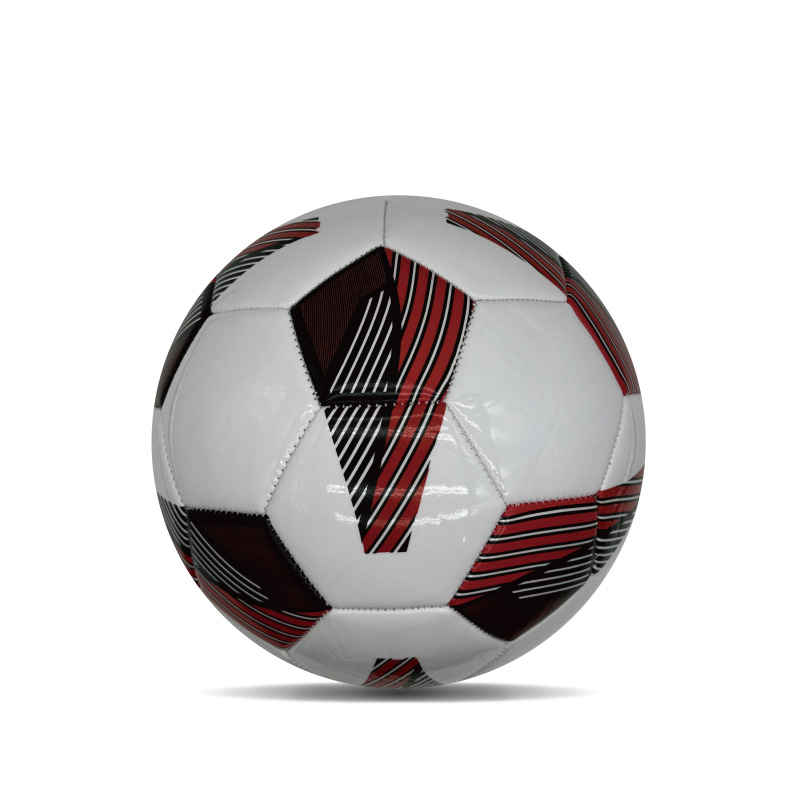 Wholesale Durable PVC Size 4 Youth Soccer Ball Print Logo Training Football BallChina Durable PVC Size 4 Youth Soccer Ball Print Logo Training Football Ball for Kids and Adults Manufacturers and Factory, Meidong Sport...View Product →
Ordering a single size is the most common approach, but mixed-size programs are becoming popular, especially where the same logo must appear on all balls. In that case, confirm that the printing method works across different panel sizes and that the logo scale adjusts proportionally.
Quality Control Points When Sourcing from a Factory
When ordering machine stitched balls in volume, the factory's quality control process matters more than the sample you hold. A perfect sample means little if the production line does not control thread tension, panel cutting, and lamination consistently.
Ask the supplier these four questions:
- What is the acceptable stitching tolerance per ball?
- How is the bladder tested for air retention before packing?
- What is the reject rate target for a standard batch?
- Can the factory provide a pre-shipment inspection report?
A supplier that answers with specific numbers is safer to work with than one that gives vague assurances. If the supplier cannot state its tolerances, treat the sample as a reference rather than a promise. For a fuller breakdown of what to expect in bulk orders, see this machine stitched football performance and buying guide.
Customization and OEM Programs
Machine stitched balls are the most customization-friendly construction method for budget-conscious programs. Because the panels are sewn rather than molded, logos, color blocks, and printed patterns can be applied to individual panels before stitching. That keeps per-unit cost low and makes small-batch custom orders more practical than with thermal bonded balls.
Most suppliers offer custom logos, custom colors, custom packaging, and mixed pallet shipments. If an order covers multiple age groups, a single production run can combine size 3, size 4, and size 5 balls with the same design. Buyers should confirm the customization scope in writing; logo placement, panel color matching, and packing requirements belong in the purchase order, not the email thread. The full process is explained in the OEM/ODM customization service overview.
The Right Time to Choose Machine Stitched
Machine stitched soccer balls fit training programs, school physical education classes, youth leagues, and any setting where the ball will see frequent use on mixed surfaces. They are also a strong choice for promotional balls with custom print, because the unit price stays low even at moderate order volumes.
The exception is competitive match play. If a ball is headed into official matches, or if the players expect a premium touch, a thermal bonded ball is the better investment. Machine stitched construction cannot fully copy the soft, seamless response of a bonded surface, and experienced players notice the difference within the first few touches.
Machine stitched soccer balls are not the cheapest option on the market, and they are not the most advanced. They are the most dependable for organizations that need consistent quality at a manageable price. Source from a factory that controls stitch density, uses quality materials, and is transparent about its tolerances. A well-made machine stitched ball will survive a full season of training, hold its shape, and keep an equipment budget under control.