


 English
 русский
 Español
 Deutsch
 عربى
عربى 中文简体
中文简体
Content
- I. Process Origins: From Raw Materials to Molding, the Differentiated Craftsmanship of Two Texture Types
- II. Core Differences and Exclusive Advantages: Precise Performance Matching Between Two Texture Types
- III. All-Scenario Adaptation Guide: Precisely Matching Every Sports Need
- 3. Beginner/Multi-Scenario Application – Precise Selection Based on Needs
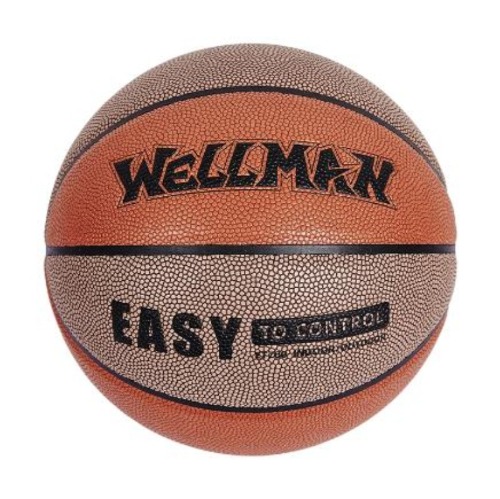
As basketball has transitioned from professional competitions to widespread popularity, the sport has evolved into diverse scenarios, including outdoor courts, indoor professional stadiums, and school training grounds. At this point, the surface texture of a basketball is no longer merely a decorative element, but a core component directly determining its anti-slip performance, ball control feel, and durability. WELLMAN, a brand under Hangzhou Meidong Sporting Goods Co., Ltd., deeply rooted in the ball sports industry, has accurately grasped the needs of different sports scenarios, creating two core texture series of basketballs: wave texture and flat texture. Through differentiated process design and performance optimization, they provide basketball enthusiasts of different levels and in different scenarios with an optimal sports experience.
I. Process Origins: From Raw Materials to Molding, the Differentiated Craftsmanship of Two Texture Types
The form and performance of the Leather Basketball surface texture are fundamentally determined from the raw material selection stage, and the subsequent molding process directly determines the stability and consistency of the texture. Leveraging over ten years of experience in ball production, WELLMAN has built two standardized production systems covering the entire process, specifically tailored to the characteristics of wave and flat textures:
Production process breakdown
1. Wavy Pattern Basketball: A Durable 3D Texture Process
-
Raw Material Selection: Utilizing high-density, thickened PU fabric, far exceeding ordinary PU fabric, providing a durable foundation for use on rough outdoor courts. Simultaneously, a pre-coated anti-slip coating enhances the friction effect of the subsequent texture.
-
Precision Cutting: The basketball pieces are cut using a fully automated cutting machine, with an error controlled within ±0.5mm. This ensures precise alignment of the texture on each piece, preventing misalignment that could affect the feel of the finished basketball.
-
3D Molding: The core process employs a 120℃ high-temperature, 8MPa high-pressure mold specifically designed for wavy patterns. The mold texture features a biomimetic anti-slip design, with raised sections featuring a curved transition (avoiding sharp edges that could cut hands). The texture depth is precisely controlled between 0.8-1.2mm—a depth tested thousands of times to ensure sufficient friction without excessive depth causing resistance during ball control.
-
Secondary Curing and Trimming: After the molded basketball pieces are bonded to the natural rubber bladder, they are placed in a constant-temperature curing oven to enhance the adhesion between the fabric and the bladder, while also ensuring more stable wavy texture. After curing, the edges are meticulously trimmed manually to remove excess adhesive, ensuring the basketball’s roundness error is ≤1mm.
2. Smooth Texture Basketball: A Professional-Grade Process for High Smoothness
-
Raw Material Selection: Imported high-elasticity, smooth PU fabric is used, offering a delicate touch and slight sweat-absorbing properties, suitable for the feel requirements of professional indoor games.
-
Low-Temperature Cutting and Pre-treatment: CNC fully automated cutting is also used. After cutting, the edges of the basketball pieces undergo a low-temperature softening treatment to prevent edge lifting during subsequent bonding, ensuring surface smoothness.
-
Cold bonding and cold pressing molding: Unlike the high temperature and high pressure process of the wave pattern, the flat pattern adopts the room temperature cold bonding process. After the ball piece and the high elastic butyl inner liner are precisely bonded, uniform pressure is applied and the surface is kept at a constant temperature. The low temperature process can preserve the smoothness of the fabric to the greatest extent and avoid the shrinkage and deformation of the fabric caused by high temperature. At the same time, uniform pressure ensures that the ball piece is bonded without air bubbles, thus ensuring a smooth surface from the source.

-
Fine polishing and quality inspection: After bonding, a three-level gradient polishing process (coarse polishing → medium polishing → fine polishing) is adopted. By using a wool polishing wheel and a special polishing agent, the surface roughness of the basketball is controlled within Ra0.8μm (this standard meets the surface requirements of FIBA event balls). Finally, manual point-by-point inspection is carried out to ensure that there are no bumps, dents or scratches on the surface.
II. Core Differences and Exclusive Advantages: Precise Performance Matching Between Two Texture Types
Based on different manufacturing processes, wave-pattern and flat-pattern basketballs exhibit significant differences in core experience dimensions such as anti-slip properties, ball control feel, durability, and maintenance ease. Each type possesses irreplaceable core advantages, precisely matching different sports needs:
1. Anti-slip Performance: Scenario-Adaptive Friction Logic
-
Wave-pattern basketball: Its core advantage is “strong environmentally adaptable anti-slip.” The three-dimensional texture significantly increases the contact friction between the palm and the ball surface, maintaining stable grip even in high outdoor temperatures, humidity (residual water stains after rain), or sweaty hands. According to WELLMAN laboratory test data, on rough surfaces such as concrete and synthetic surfaces, the anti-slip performance of the wave-pattern basketball is more than 40% better than the flat-pattern, effectively preventing the basketball from slipping out of the hand during intense competition.
-
Flat-pattern basketball: Its core advantage is “professional-grade precise anti-slip.” Its smooth surface isn’t completely frictionless; rather, it achieves “controllable anti-slip” through the fabric’s micro-abrasive texture and sweat-absorbing properties. On flat surfaces like indoor wooden floors, the smooth texture won’t create excessive resistance due to friction, while precisely matching the ball-handling force of professional players. This prevents excessive friction from affecting the smoothness of passing and shooting, fully meeting the stringent standards of FIBA competitions for basketball anti-slip performance.
2. Ball Handling Feel: Precise Differentiation Between Power-Based and Skill-Based Playing Styles
-
Wave-Patterned Basketball: Emphasizing a “solid grip,” suitable for power-based playing styles. The strong tactile feedback from the three-dimensional texture allows users to clearly perceive the grip position of the basketball, providing a greater sense of “control” when exerting force. It’s especially suitable for scenarios involving powerful dribbling, quick changes of direction, and high-intensity competition. For example, street basketball enthusiasts and school players in intense competition need to use powerful dribbling to adjust their rhythm; the wavy grip makes each stroke more precise, reducing errors.
-
Smooth Texture Basketball: Primarily features a “delicate and absorbent feel,” suitable for skill-based playing styles. Its smooth and slightly elastic surface allows the basketball to conform more closely to the palm, creating a soft “absorbent effect,” ideal for scenarios requiring precise passing, delicate ball control, and high-arc shots. Professional guards and shooting players prefer smooth texture basketballs because they reduce ball resistance, allowing for more precise control of passing power and shooting arc.
3. Durability and Maintenance: Lifespan Advantage Adaptable to Different Usage Environments
-
Wave Texture Basketball: Significantly superior durability, making it the “first choice for outdoor durability.” High-density, thickened PU fabric and 3D molding technology greatly enhance the ball’s abrasion resistance. It is less prone to surface wear and cracking when facing friction on concrete surfaces or scratches from small stones. According to actual usage data, wave texture basketballs can last 12-18 months with high-frequency outdoor use (3-5 times per week), more than 30% longer than ordinary smooth texture basketballs. For maintenance, although dust can easily accumulate in the crevices of the textured surface, it can be easily cleaned by simply rinsing with water and wiping with a soft brush.
-
Smooth-textured basketballs: Their durability is better suited for indoor environments, with the core advantage being “easy to clean and maintain.” Their surface has no deep grooves, preventing the accumulation of dust and sweat stains; after use, a gentle wipe with a dry cloth is all it takes to restore cleanliness. The highly elastic and smooth fabric is also less prone to wear and tear from friction with indoor wooden floors, but contact with sharp objects (such as metal fences or fingernail scratches) should be avoided. Under normal use in professional indoor venues, smooth-textured basketballs can last 18-24 months, making them suitable for long-term, fixed-venue training or competitions.
III. All-Scenario Adaptation Guide: Precisely Matching Every Sports Need
Combining the core advantages of two texture types, WELLMAN provides clear adaptation solutions for different scenarios and different groups of people, allowing consumers to quickly find the right basketball for them:
1. Outdoor Courts/Street Basketball Scenarios – Wavy Texture Basketballs are the First Choice
Suitable Venues: Community cement courts, school synthetic courts, street outdoor courts, and other rough surfaces;
Suitable Groups: Street basketball enthusiasts, frequent school court players, outdoor basketball training institutions;
2. Indoor Professional Venues/Event Scenarios – Smooth Texture Basketballs are the Essential Choice
Suitable Venues: Professional basketball court wooden floors, designated venues for professional/amateur events, high-end basketball training institutions;
Suitable Groups: Professional players, event organizers, skill-based basketball enthusiasts, youth professional training camps;
3. Beginner/Multi-Scenario Application – Precise Selection Based on Needs
If beginners primarily practice outdoors (e.g., on concrete surfaces in residential areas or park courts), prioritize a wavy-patterned basketball: it offers greater tolerance for error, and even with immature ball control skills, its strong anti-slip properties reduce slippage and mistakes. It’s also durable, requiring less frequent replacement.
If beginners primarily train indoors (e.g., in paid basketball courts or school indoor training facilities), a flat-patterned basketball is recommended: it allows for earlier adaptation to a professional-grade feel, developing refined ball control and shooting skills, laying a foundation for future improvement.
If both indoor and outdoor use are required, with higher outdoor usage, a wavy-patterned basketball is still the preferred choice. If indoor use accounts for over 70% of the time, a flat-patterned basketball can be chosen, while avoiding use on rough surfaces to extend its lifespan.