


 English
 русский
 Español
 Deutsch
 عربى
عربى 中文简体
中文简体
Content
- 1. Consistency in Stitching and Shape
- 2. Increased Durability
- 3. Cost-Effectiveness
- 4. High Performance and Predictable Behavior
- 5. Water Resistance and Weather Adaptability
- 6. Variety and Customization Options
- 7. Consistency in Inflation and Air Retention
- 8. Suitable for High-Volume Use
- 9. Low Maintenance Requirements
- 10. Accessibility for Beginners and Casual Players
- Conclusion
Football, often regarded as the world’s most popular sport, relies not only on player skill but also on the equipment used. Among the essential equipment, the football itself plays a critical role in determining the quality of play, durability, and overall experience. Footballs are available in various types, materials, and manufacturing methods, with the two most common being machine-stitched and hand-stitched footballs. While both types have their merits, machine-stitched footballs have become increasingly popular in recent years due to their unique advantages.
1. Consistency in Stitching and Shape
One of the primary advantages of a Machine Stitched Football is the consistency in its stitching and overall shape. Unlike hand-stitched footballs, where variations in tension and skill can lead to minor irregularities, machine stitching ensures that each panel is sewn with precise uniformity.
- Even Tension: Machine stitching maintains consistent thread tension across all panels. This consistency reduces weak points that could cause the football to deform over time.
- Uniform Shape: Machine-stitched footballs are less likely to develop irregularities or bulges, ensuring predictable ball behavior during play.
For players, this consistency translates into better control, more accurate passes, and reliable bounces, which are crucial during matches and training sessions.
2. Increased Durability
Durability is a critical factor for anyone purchasing a football, especially for those who play regularly on different surfaces. Machine-stitched footballs generally offer higher durability than hand-stitched options due to several reasons:
- Strong Stitching: Machine stitching produces tight and uniform seams that are less likely to unravel or split under pressure.
- Resistance to Wear and Tear: High-frequency mechanical stitching reduces weak points in the seams, helping the ball withstand continuous use on rough surfaces such as concrete, artificial turf, and outdoor fields.
- Longevity in Various Conditions: Many machine-stitched footballs are designed with synthetic materials that endure temperature changes and moisture better than traditional leather, extending the ball’s life.
This durability makes machine-stitched footballs a preferred choice for schools, clubs, and recreational players who require a reliable football for frequent use.
3. Cost-Effectiveness
Machine-stitched footballs are generally more affordable than hand-stitched alternatives. This is due to the efficiency of mechanical manufacturing processes that reduce labor costs:
- Lower Production Costs: Machines can stitch footballs quickly and consistently, reducing the time and manual effort required for production.
- Affordable Pricing for Quality: Players and clubs can acquire high-quality footballs without paying a premium price, making it accessible for schools, community programs, and amateur leagues.
- Reduced Maintenance Costs: Because machine-stitched footballs are more durable, they require fewer replacements, which is cost-efficient in the long run.
The combination of affordability and reliability makes machine-stitched footballs ideal for organizations with budget constraints while still demanding performance.
4. High Performance and Predictable Behavior
The performance of a football is influenced not only by the material but also by its stitching and structure. Machine-stitched footballs offer several performance advantages:
- Balanced Panels: Machine stitching ensures that all panels are evenly aligned, providing a more balanced ball with predictable flight patterns.
- Improved Bounce: Uniform stitching prevents uneven inflation and panel deformation, resulting in consistent bounce during dribbling or passing.
- Enhanced Control: Players experience better grip and control because the uniform panel shape and tight seams make the football less prone to irregular movements.
These performance characteristics are especially important for competitive matches, where even minor inconsistencies in ball behavior can impact the outcome of a game.
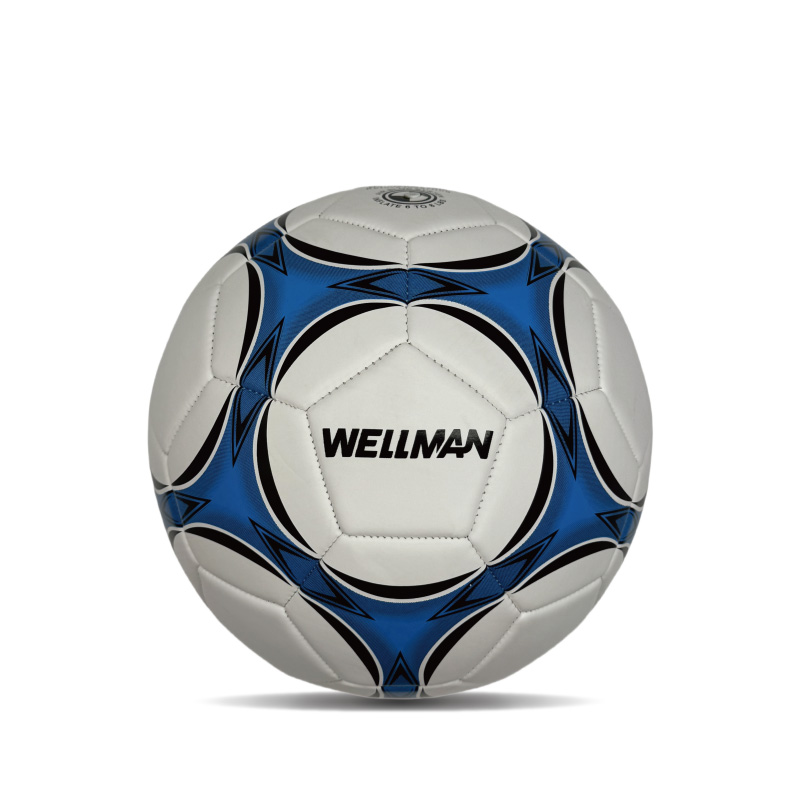
5. Water Resistance and Weather Adaptability
Hand-stitched footballs, particularly those made from natural leather, tend to absorb water during wet conditions, making them heavier and harder to handle. Machine-stitched footballs, especially those made from synthetic materials, offer better resistance to moisture:
- Water-Resistant Materials: Most machine-stitched footballs use polyurethane (PU) or polyvinyl chloride (PVC) materials that repel water and maintain their weight in wet conditions.
- Consistent Performance in Rain: Players can rely on the ball’s predictable behavior even on rainy days, reducing the risk of accidents or errors.
- Suitable for Outdoor Play: Machine-stitched footballs withstand sunlight, rain, and rough terrain, making them ideal for all-weather outdoor use.
This adaptability ensures that players can practice and compete in various environments without compromising performance.
6. Variety and Customization Options
Machine-stitched footballs are available in a wide range of designs, colors, and sizes, offering greater flexibility for players and teams:
- Diverse Designs: Manufacturers can produce footballs in various patterns and panel shapes, appealing to different aesthetic preferences.
- Team Branding: Clubs and organizations can customize machine-stitched footballs with logos, team colors, or sponsor details.
- Specialized Versions: Machine-stitched footballs can be designed for specific purposes, such as training, professional matches, or casual play.
Hand-stitched footballs, due to the labor-intensive process, offer fewer options for customization and mass production, making machine-stitched footballs more versatile.
7. Consistency in Inflation and Air Retention
Air retention is vital for maintaining the football’s shape and performance. Machine-stitched footballs generally exhibit superior air retention due to precision construction:
- Even Pressure Distribution: Uniform stitching ensures that the panels fit tightly together, minimizing air leaks.
- Improved Longevity of Inflation: High-quality valves and seamless panels help machine-stitched footballs maintain proper inflation for longer periods.
- Less Frequent Pumping: Players spend less time inflating the ball, which is especially convenient during training sessions and matches.
Reliable air retention contributes to the overall ease of use and performance consistency of machine-stitched footballs.
8. Suitable for High-Volume Use
Machine-stitched footballs are ideal for environments where multiple balls are used regularly, such as training camps, schools, and sports academies:
- Uniform Quality Across Units: Each ball produced by machines has similar stitching, weight, and balance, ensuring consistent practice sessions.
- Reduced Breakage Risk: Clubs can invest in multiple balls without worrying about frequent seam breakages or uneven wear.
- Scalable Production: Organizations can order large quantities of machine-stitched footballs at competitive rates without sacrificing quality.
This scalability makes machine-stitched footballs practical for professional and amateur sports institutions alike.
9. Low Maintenance Requirements
Unlike hand-stitched footballs, which may require periodic re-stitching or conditioning, machine-stitched footballs are relatively low-maintenance:
- Minimal Stitch Repairs: Durable machine stitching reduces the likelihood of seams coming undone.
- Easy Cleaning: Most synthetic machine-stitched footballs can be wiped clean with a damp cloth, saving time and effort.
- Long-Term Reliability: The robust construction ensures consistent performance over months or years without extensive upkeep.
For players and coaches with busy schedules, the low-maintenance aspect of machine-stitched footballs is a significant advantage.
10. Accessibility for Beginners and Casual Players
Machine-stitched footballs are particularly suitable for beginners and recreational players due to their affordability, durability, and ease of use:
- Forgiving Surface: The uniform construction provides a predictable touch, which helps beginners improve ball control.
- Durable Enough for Casual Play: Players can practice on various surfaces without worrying about damaging the ball.
- Widely Available: Machine-stitched footballs are easier to find in sports stores, online platforms, and school suppliers.
This accessibility helps promote the sport by making quality footballs available to a wider audience.
Conclusion
While both hand-stitched and machine-stitched footballs have their place in the world of football, machine-stitched footballs offer distinct advantages that make them an excellent choice for players of all levels. From consistent stitching, durability, and predictable performance to affordability, water resistance, and low maintenance, machine-stitched footballs are practical, versatile, and reliable.
For schools, clubs, recreational players, and even semi-professional athletes, investing in a machine-stitched football ensures long-term value, consistent play, and a better overall football experience. While hand-stitched footballs may appeal to purists or collectors, machine-stitched footballs are the pragmatic choice for everyday use, offering a balance of quality, performance, and cost-effectiveness.
Choosing the right football is essential not only for improving skills but also for enjoying the game safely and comfortably. Understanding the advantages of machine-stitched footballs allows players and coaches to make informed decisions and enhances the enjoyment and quality of football at all levels.